

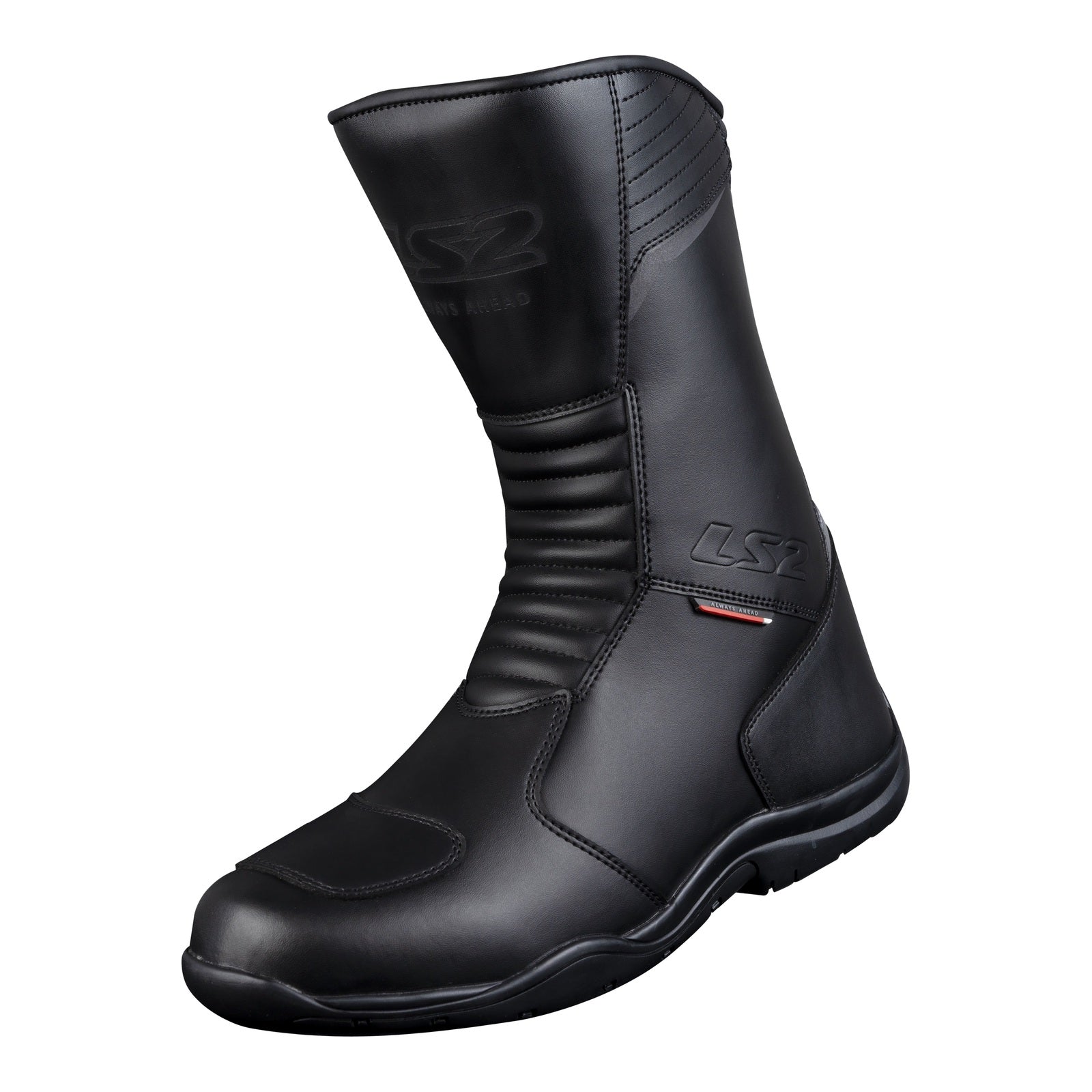
Touring motorcycle boots are purpose-built for long-distance road riding where waterproofing, ankle protection and all-day comfort matter as much as impact resistance. Leather construction, CE-certified ankle armour and waterproof membranes define what separates a true touring boot from a casual street shoe.
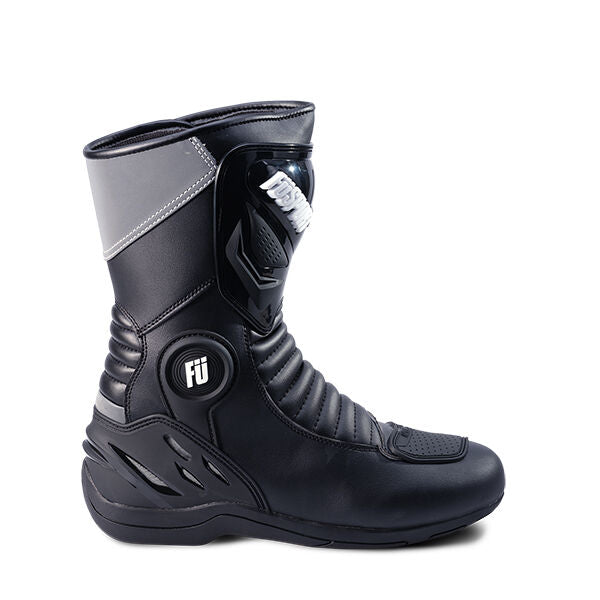
How to Choose Touring Motorcycle Boots
The right touring boot protects your ankle, keeps your foot dry across 600-kilometre days and still lets you walk around a servo comfortably. Three things decide the call: CE protection rating, waterproofing system and sole grip on wet surfaces.
Protection Standards That Matter
EN 13634:2017 is the benchmark for motorcycle boots in Australia. It tests four zones: sole penetration resistance, ankle shaft height, transverse rigidity and heel-to-toe energy absorption. Level 2 in each zone is the most demanding threshold. CE certification must appear on the label , claims without a CE mark are not independently verified.
Specification Comparison
| Feature | Entry Touring | Mid Touring | Full Touring |
|---|---|---|---|
| EN 13634 Rating | Level 1 | Level 1-2 | Level 2 |
| Upper Material | Leather / Textile | Full Grain Leather | Full Grain Leather |
| Waterproofing | Water Resistant | Waterproof Membrane | Waterproof Membrane |
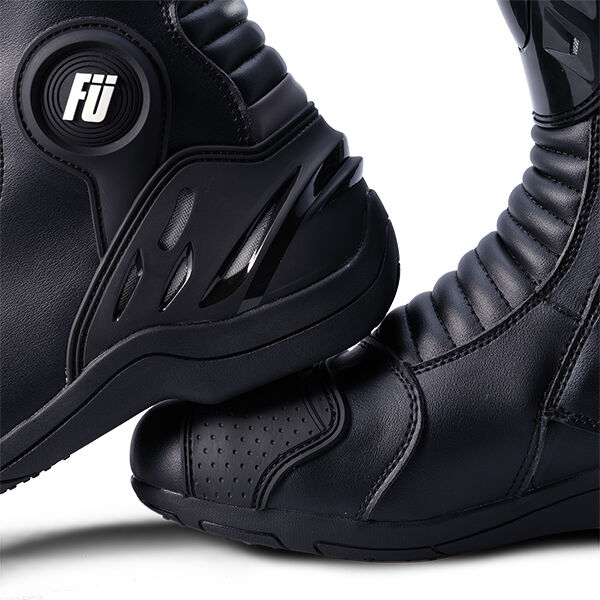
| Ankle Protection | Padded Inserts | CE Level 1 Armour | CE Level 2 Armour |
| Sole Grip | Standard Rubber | Oil-Resistant Rubber | Anti-Slip, Oil-Resistant |
| Shaft Height | Low Cut | Mid Cut | Full Ankle Cover |
Brands in This Range
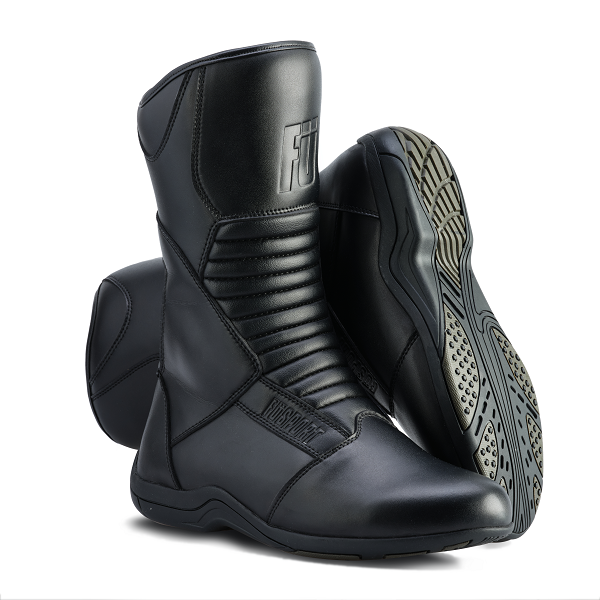
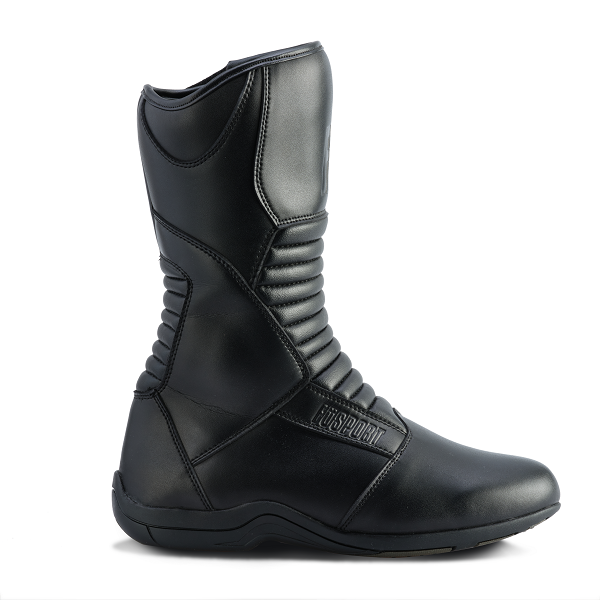
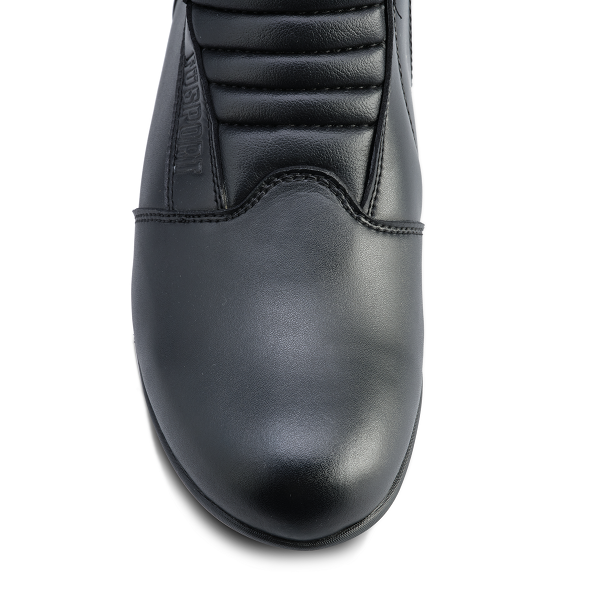
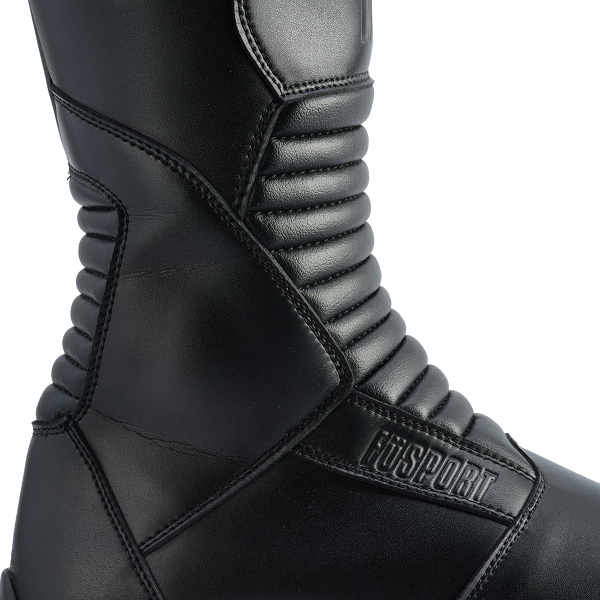
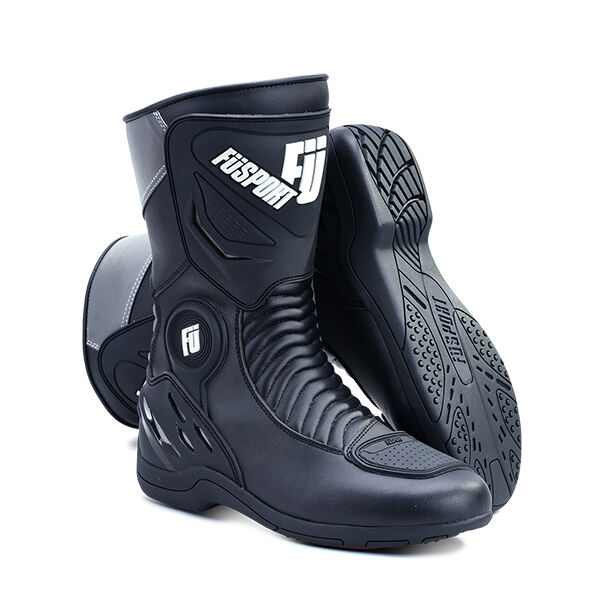
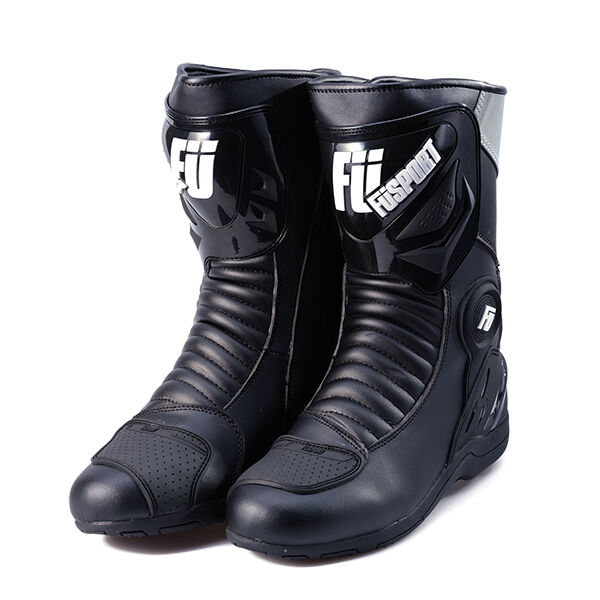
Fusport boots are made in Italy with full-grain leather uppers and have supplied the Australian market for over 20 years. LS2's Urano brings a waterproof membrane liner rated for sustained rainfall. Oxford Hunter boots use twin-zip entry for fast on/off without compromising ankle coverage. Falco's OXEGEN 3 WTR uses a WTR waterproof construction with a leather chassis. All 4 brands meet CE EN 13634 certification requirements for sale in Australia.
Sizing Note
Touring boots are sized in EU scale. Most brands run true to size, but a thick merino wool sock adds 1-2 mm of heel lift, which affects how CE Level 1 or Level 2 ankle armour sits against your joint. Size up if you plan to wear heavy socks on cold-weather multi-day rides.
Frequently asked questions
What is EN 13634 and why does it matter for touring boots?
EN 13634:2017 is the European safety standard for motorcycle footwear. It tests sole penetration resistance, ankle shaft height, transverse rigidity and energy absorption at the heel. Level 2 across all 4 zones is the highest rating and is the target for serious long-distance road riding where ankle injuries in a slide are a real risk.
Are waterproof touring boots actually waterproof or just water resistant?
Boots with a sealed waterproof membrane liner (such as those using WTR or equivalent constructions) keep water out in sustained rain and shallow crossings. Water-resistant treatments repel light moisture but will eventually saturate. Check the spec sheet for the word membrane and look for sealed seams around the sole join, which is the most common water entry point.
Can I wear touring boots for everyday commuting as well as long trips?
Yes. Touring boots are designed to be walkable and comfortable over a full day, making them practical for commuting. CE-rated ankle protection and waterproofing are active on a 10 km commute or a 1,000 km run. The trade-off versus a pure commuter boot is additional weight and shaft height, which many riders prefer for the added ankle coverage.
Afterpay & Zippay Available
Afterpay & Zippay Available