

Body armour is the layer that takes the hit so your spine and torso do not. This range covers full body protectors, race vests and armoured denim from Leatt, Merlin and Shot, built around CE-rated impact foam that absorbs energy on impact and shrugs off everyday riding so you can move freely.
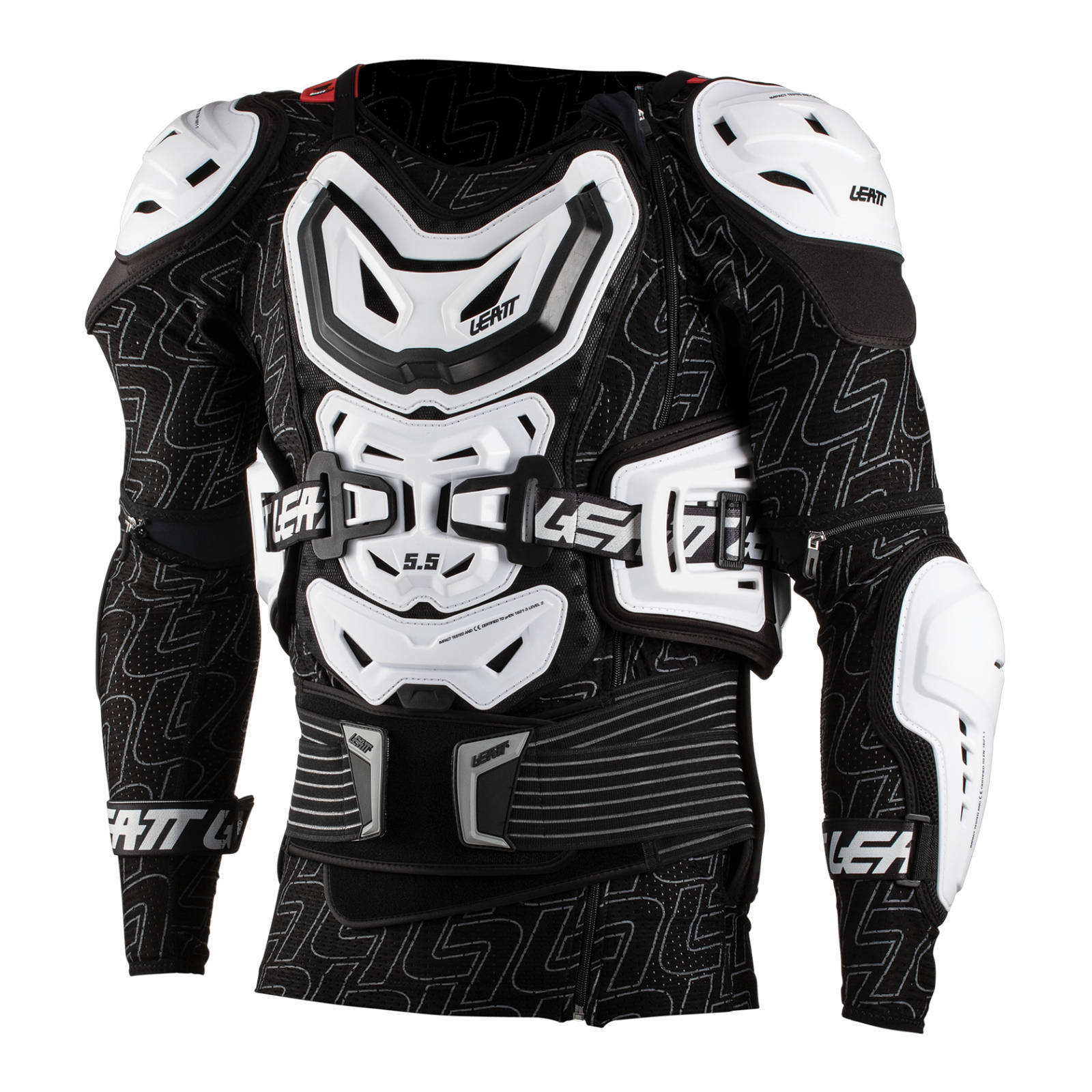
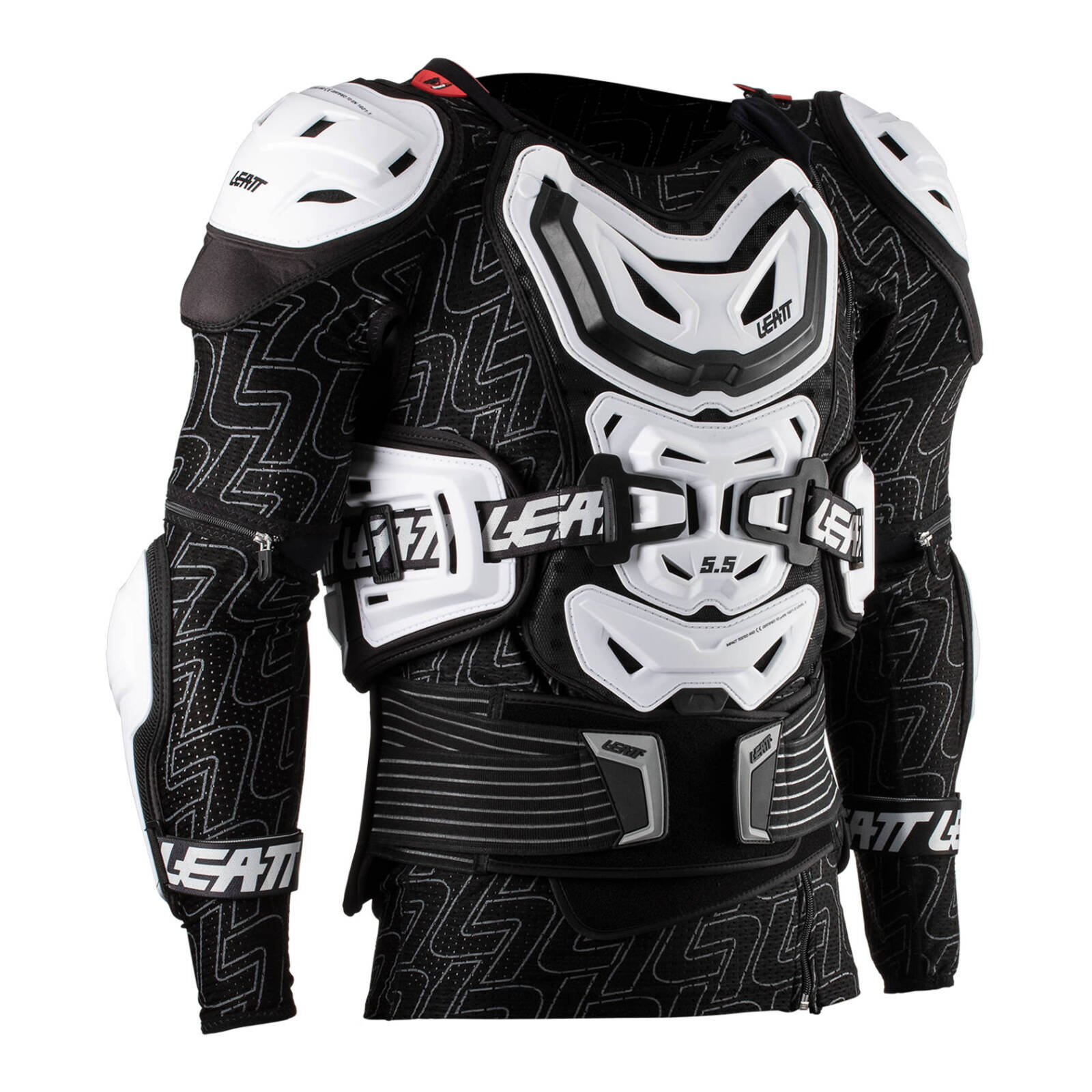
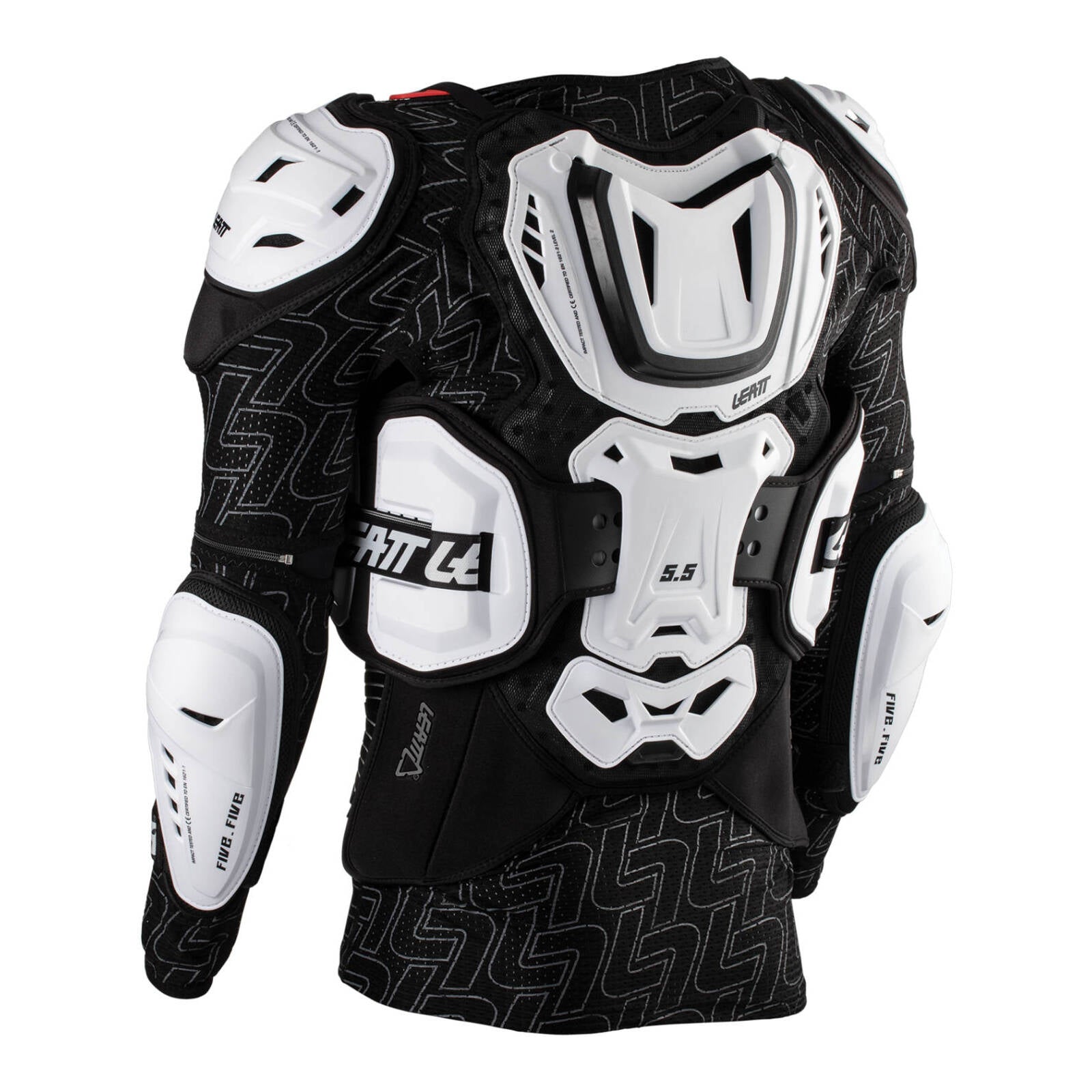
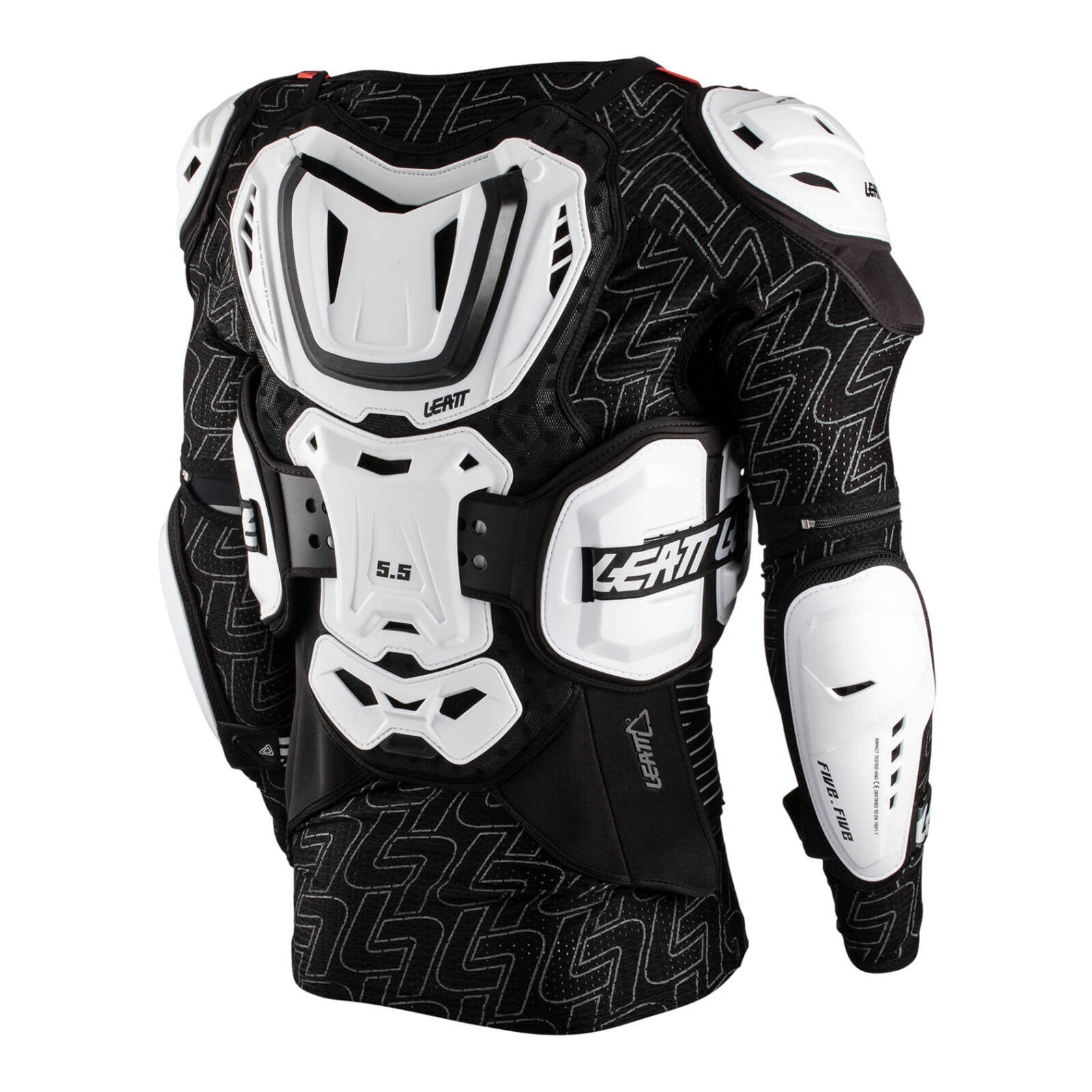
Choosing motorcycle body armour
Body armour is rated on how much impact energy it absorbs and which body zones it covers. CE Level 2 back protectors transmit no more than 9 kN of residual force in testing, while CE Level 1 caps at 18 kN, so Level 2 is the stronger barrier for spinal protection. Coverage matters as much as the rating: a full body protector guards the back, chest and shoulders, a race vest focuses on the torso, and armoured denim builds D3O inserts into a wearable layer.
| Type | Coverage | Impact standard | Best for |
|---|---|---|---|
| Full body protector | Back, chest, shoulders | CE Level 1 and Level 2 | Enduro and off-road |
| Race vest | Torso, back | CE Level 2 back insert | Track and trail |
| Armoured denim vest | Back, chest | D3O CE inserts | Casual and urban riding |
Fit drives performance. Armour should sit flush against the spine with no more than 10 mm of gap, and adjustable straps let you tune the wrap across a 5 cm to 15 cm range. D3O inserts stay soft and flexible until an impact above roughly 200 G locks the molecules together, then return to flexible within seconds. Ventilated 3D-foam designs add airflow channels to cut heat on long rides. Back protectors are sized to spine length, with most adult panels spanning 40 cm to 50 cm, and EN 1621-2 governs back protector impact performance while EN 1621-1 covers limb armour. Pair body armour with a CE Level 2 back protector and add separate elbow and knee guards for full limb cover.
Frequently asked questions
What is the difference between CE Level 1 and Level 2 body armour?
The rating measures how much impact force passes through to your body. CE Level 1 transmits up to 18 kN in testing, while CE Level 2 caps at no more than 9 kN, so Level 2 absorbs more energy and offers stronger protection for the spine and torso.
How should motorcycle body armour fit?
Armour should sit flush against your spine with minimal gap and stay snug without restricting movement. Use the adjustable straps to pull it tight across your chest and waist so it cannot shift on impact, and check that you can still rotate your shoulders freely.
Is a body protector enough on its own?
A full body protector covers your back, chest and shoulders, which protects the core. For full coverage you should add separate elbow guards and knee guards, since most body protectors do not extend to the limbs.
Afterpay & Zippay Available
Afterpay & Zippay Available