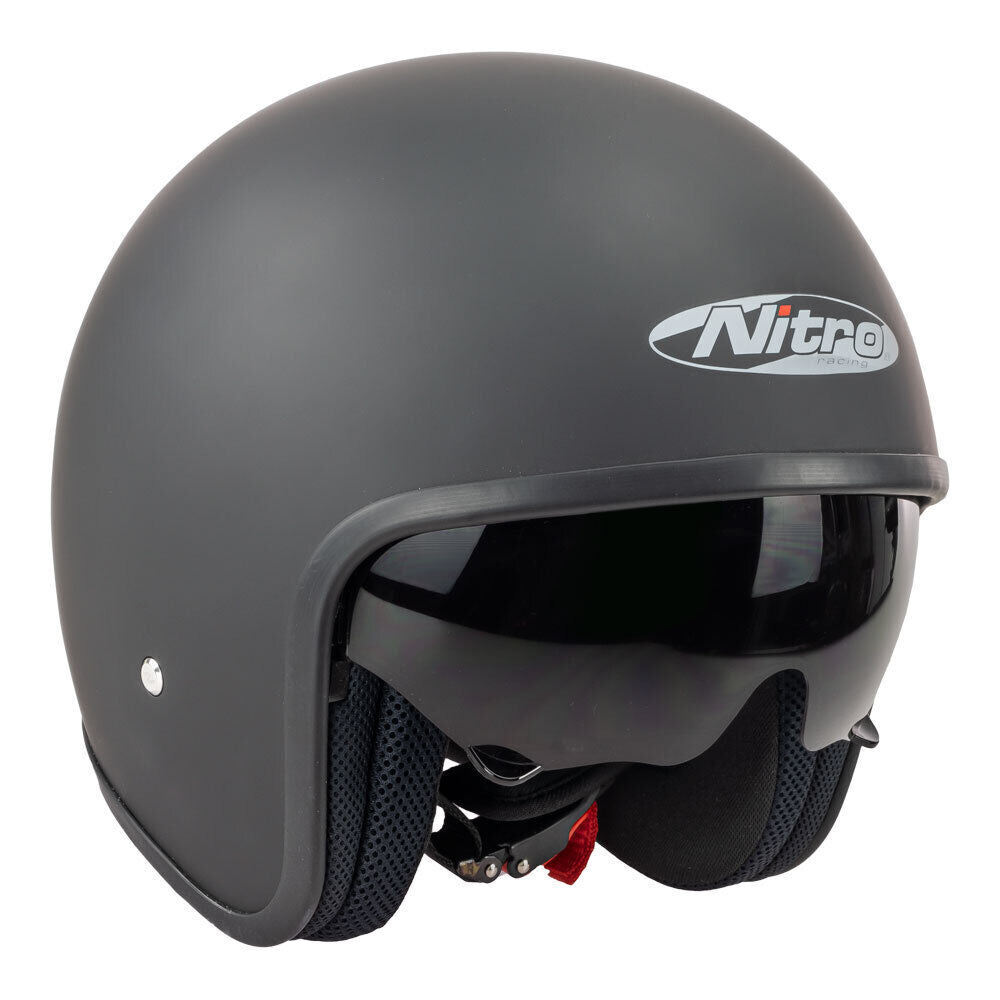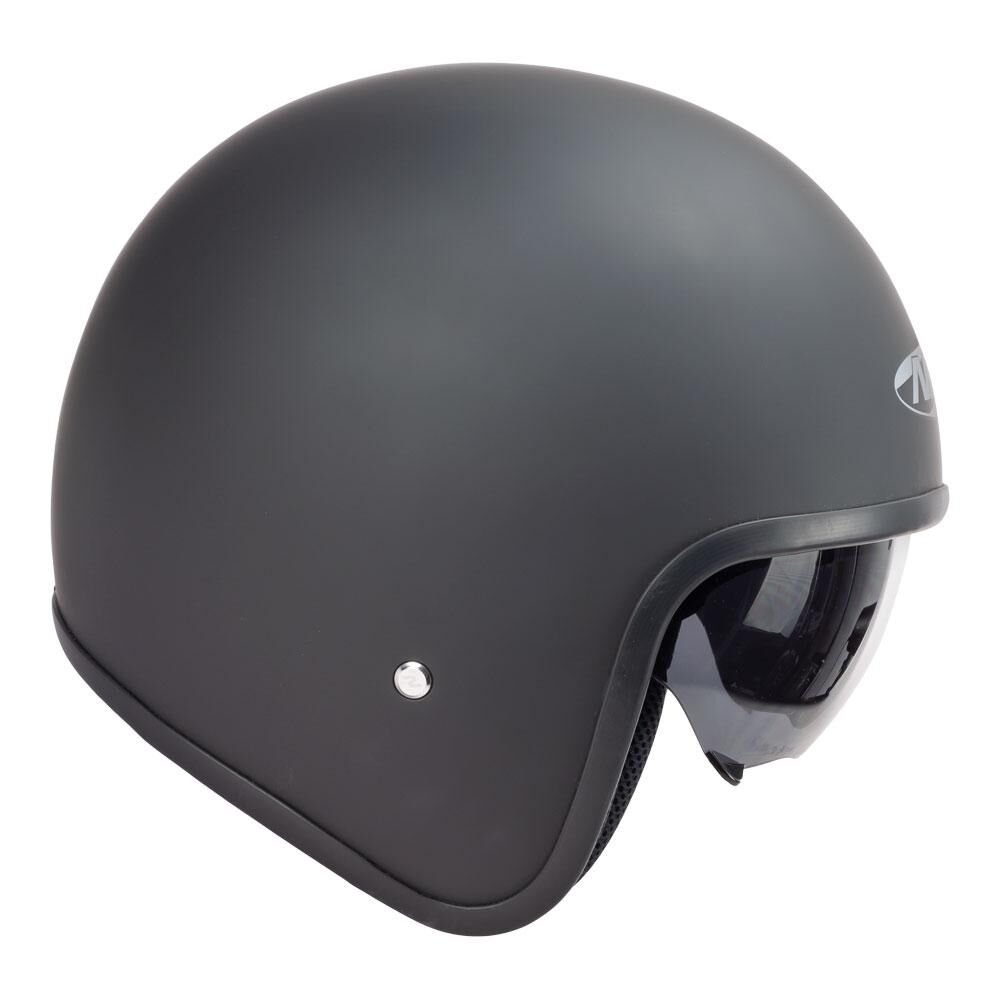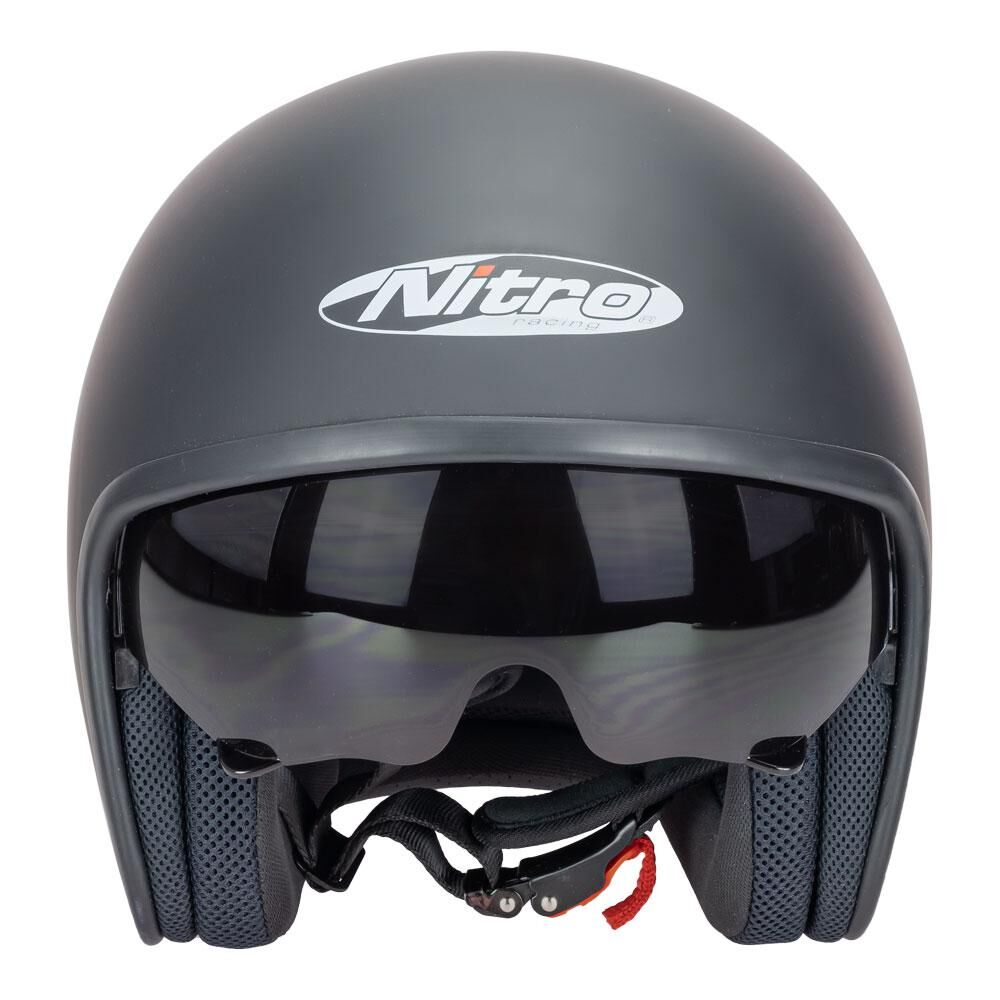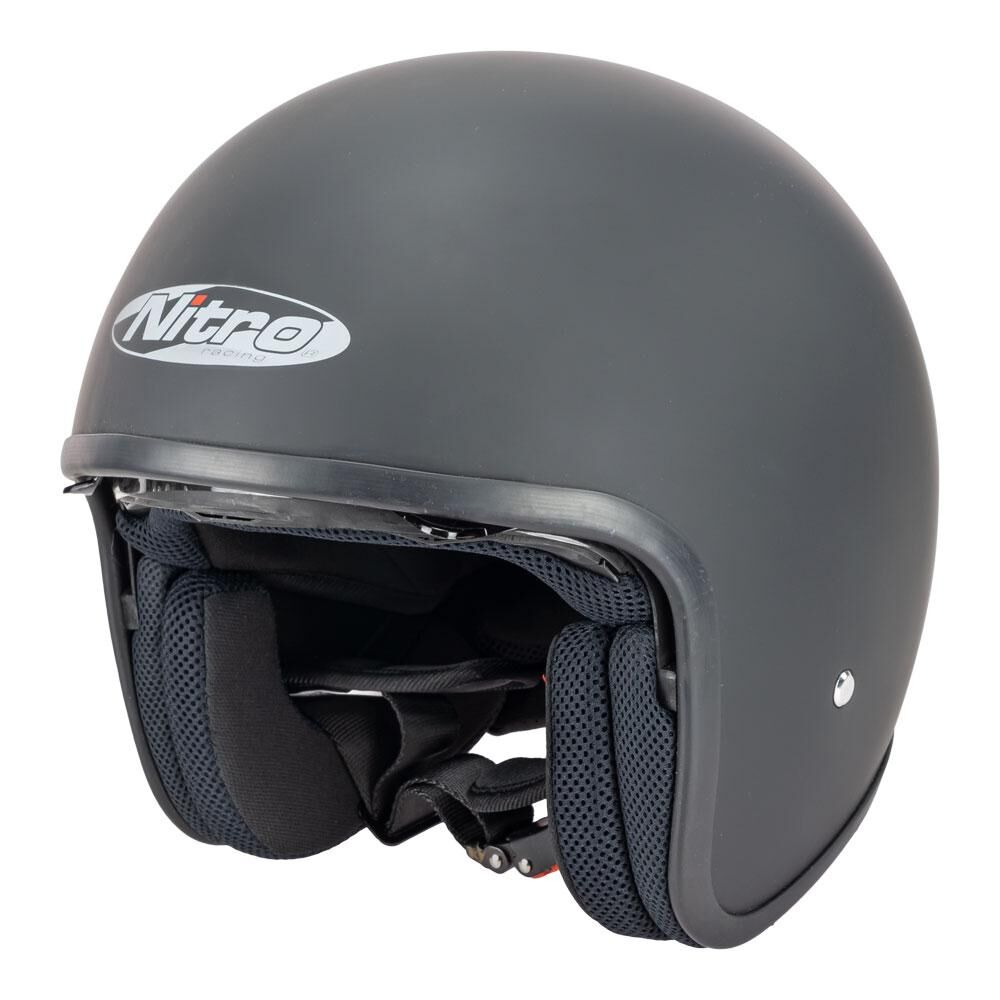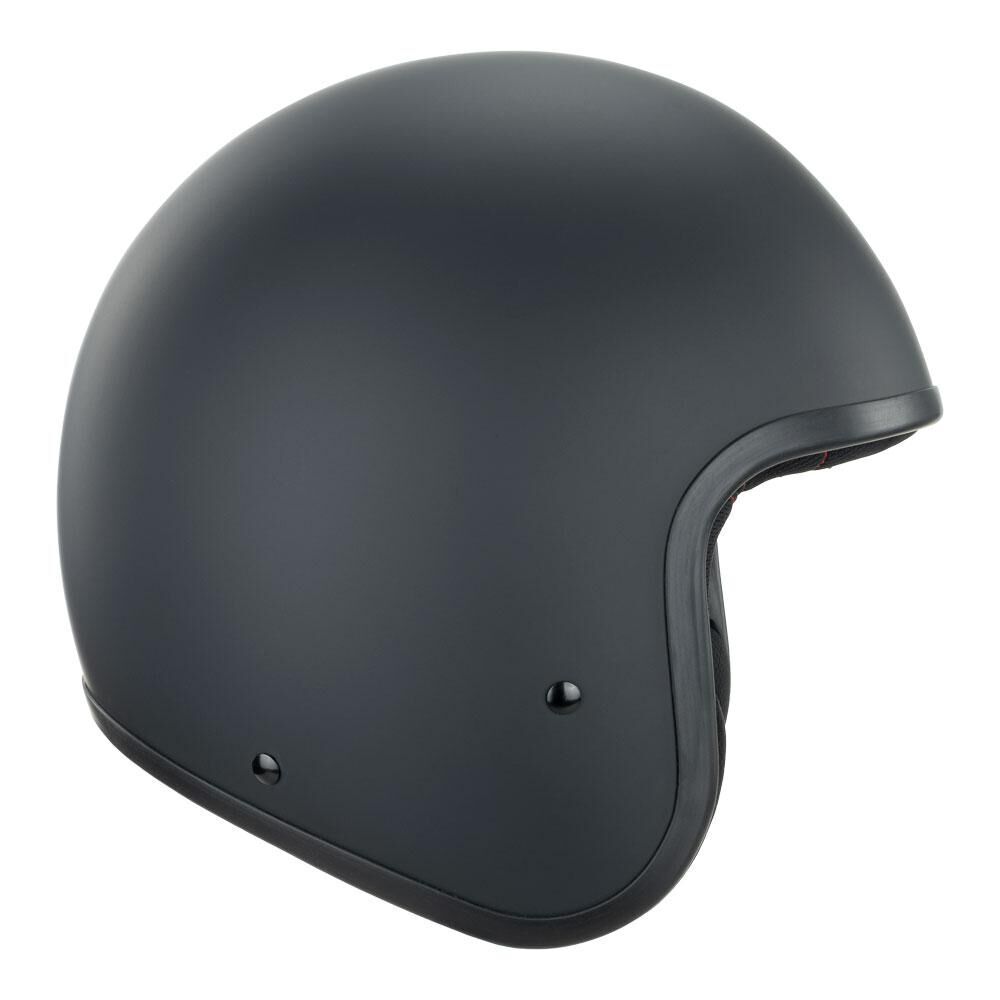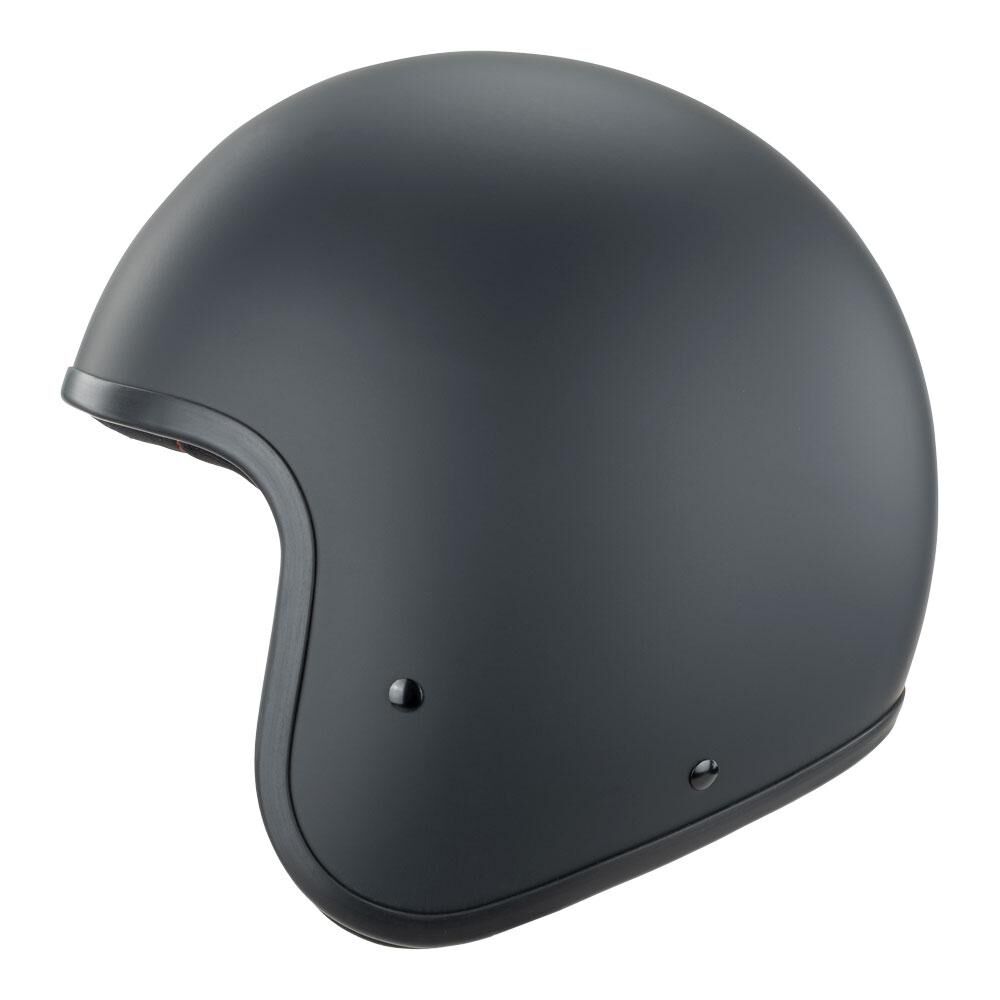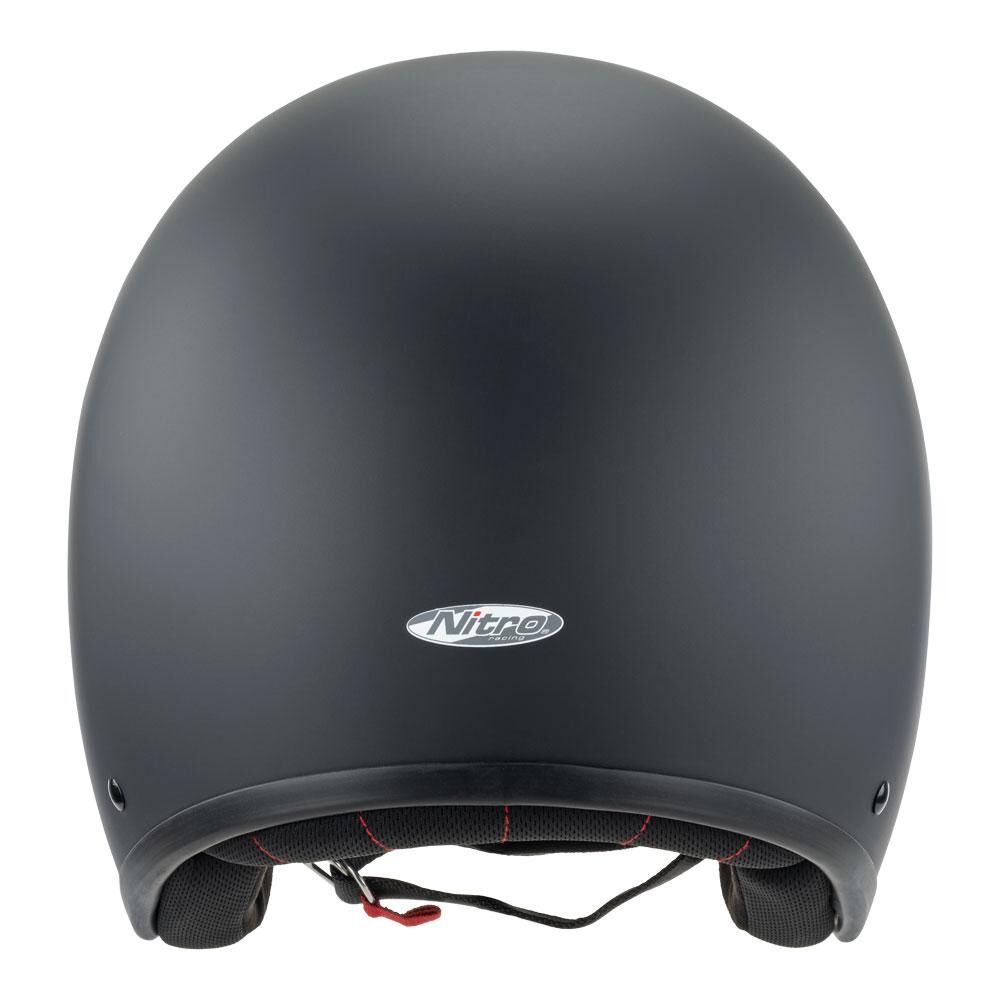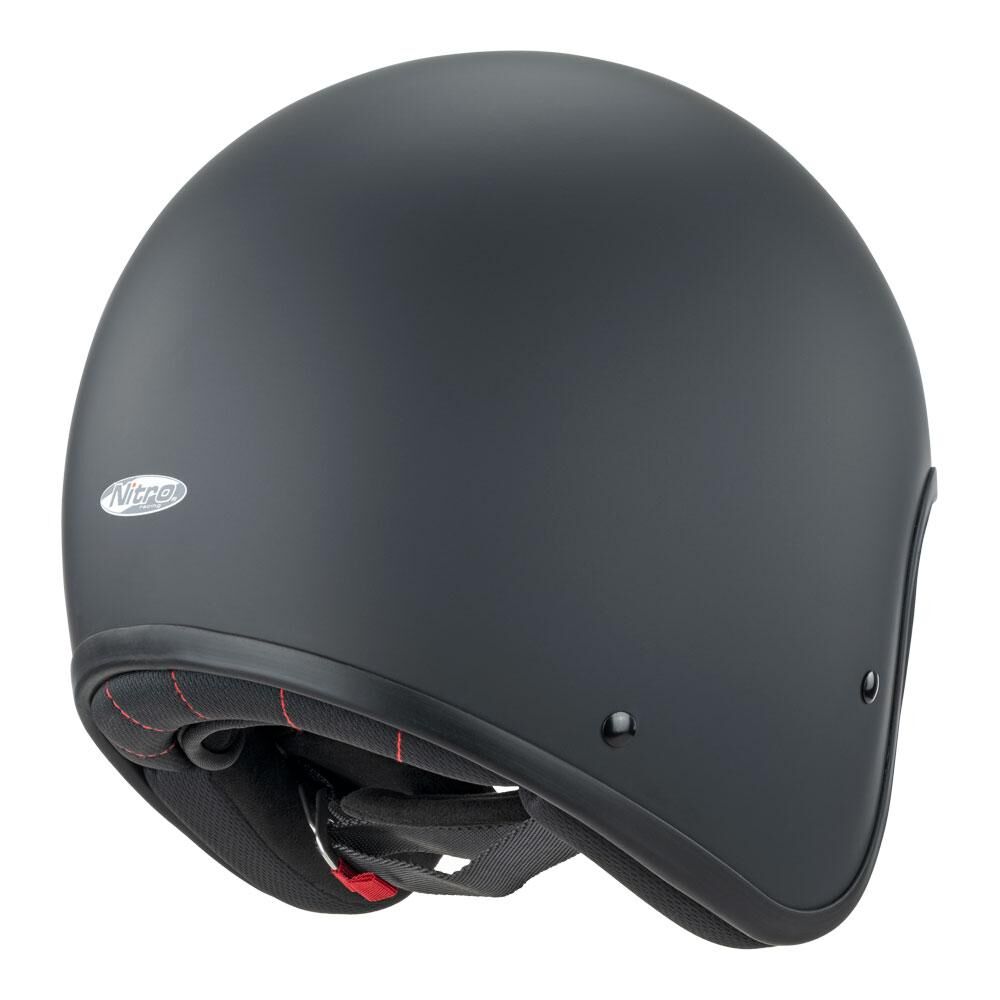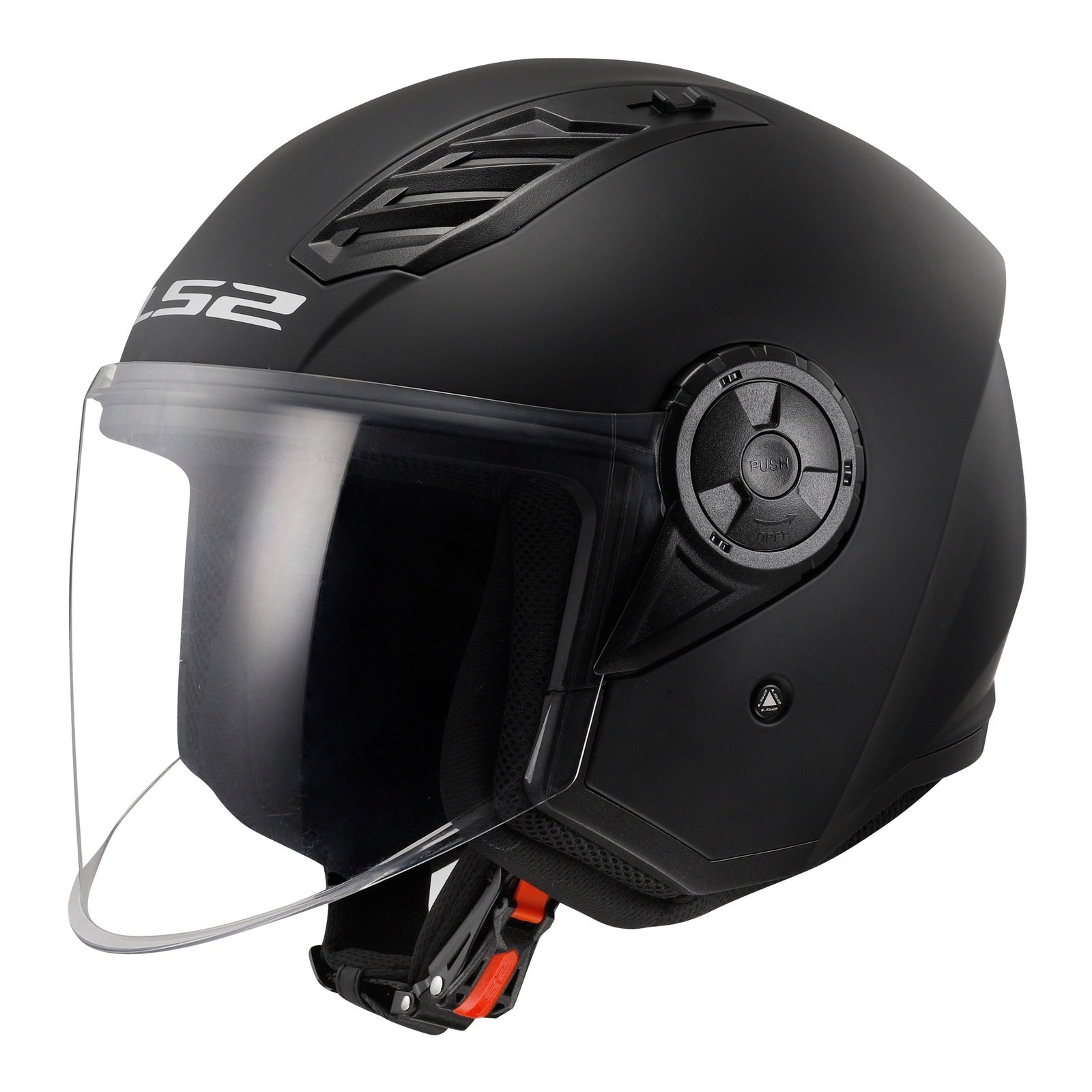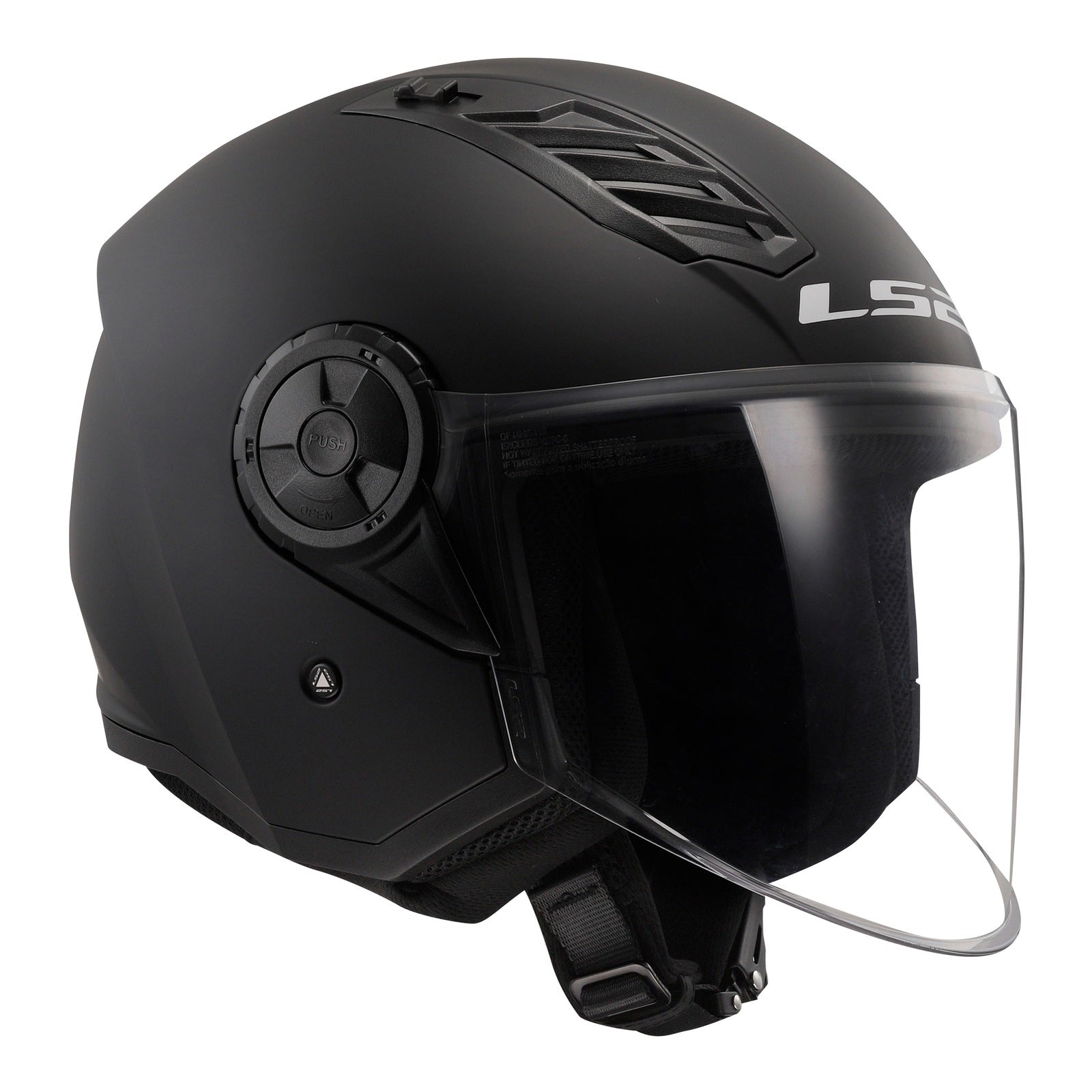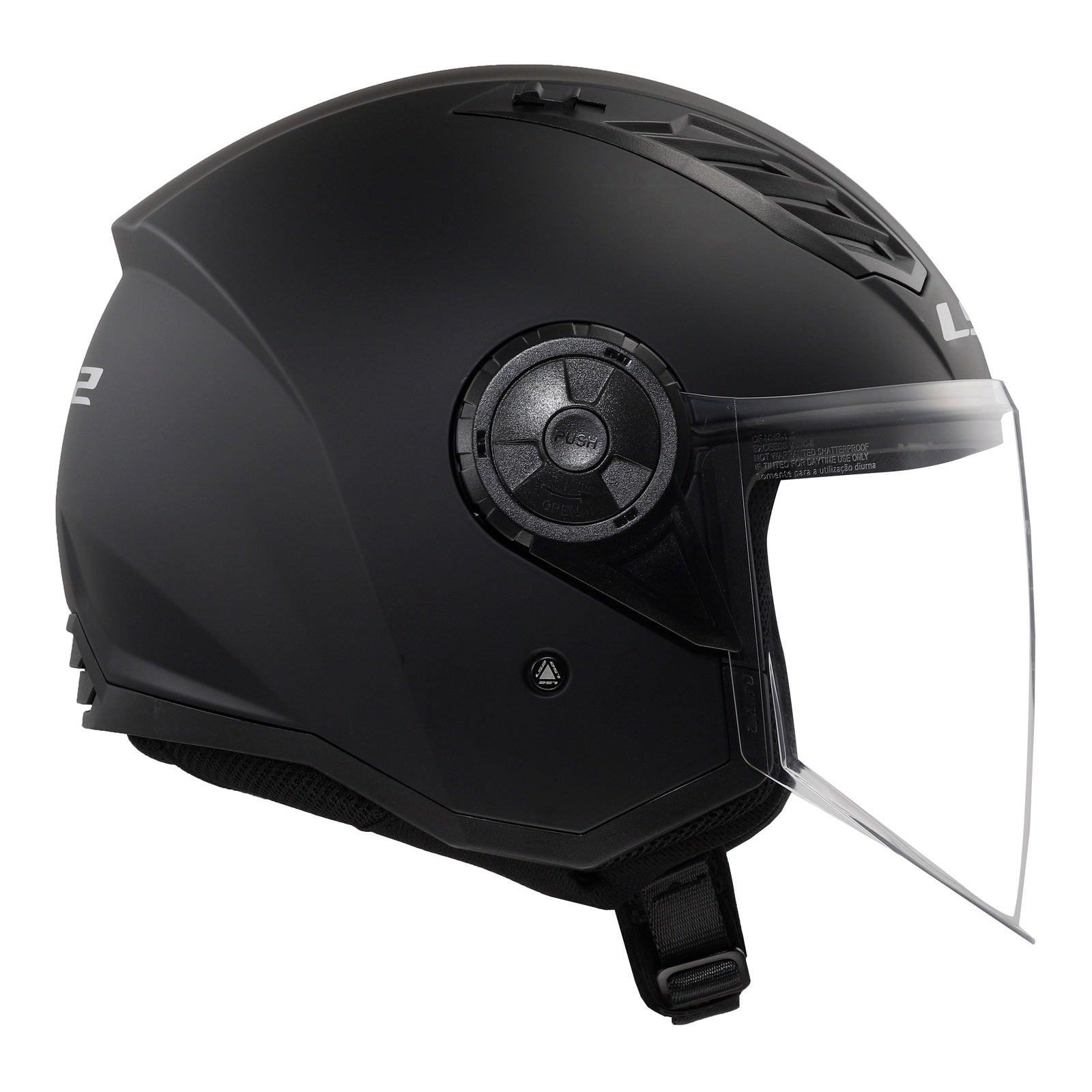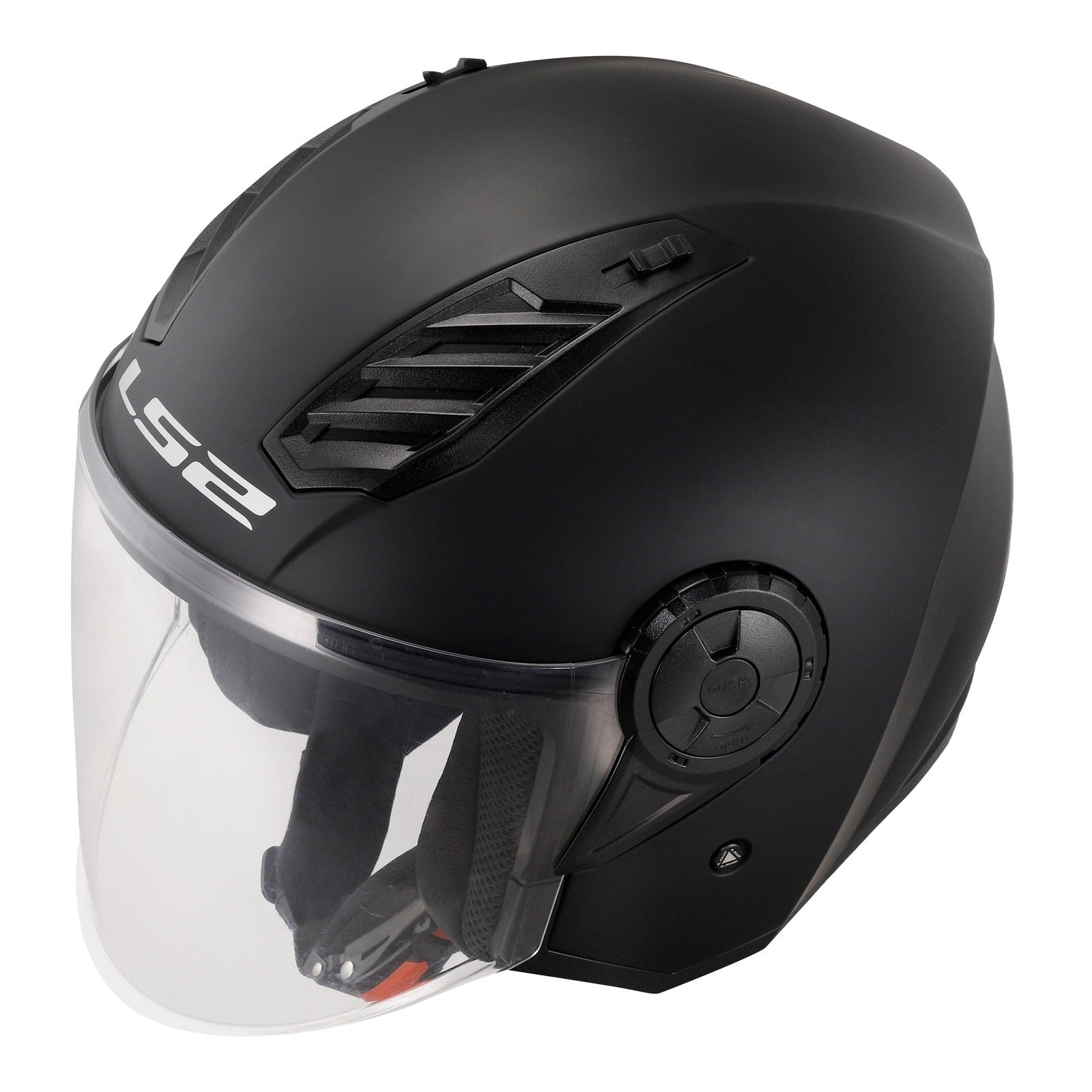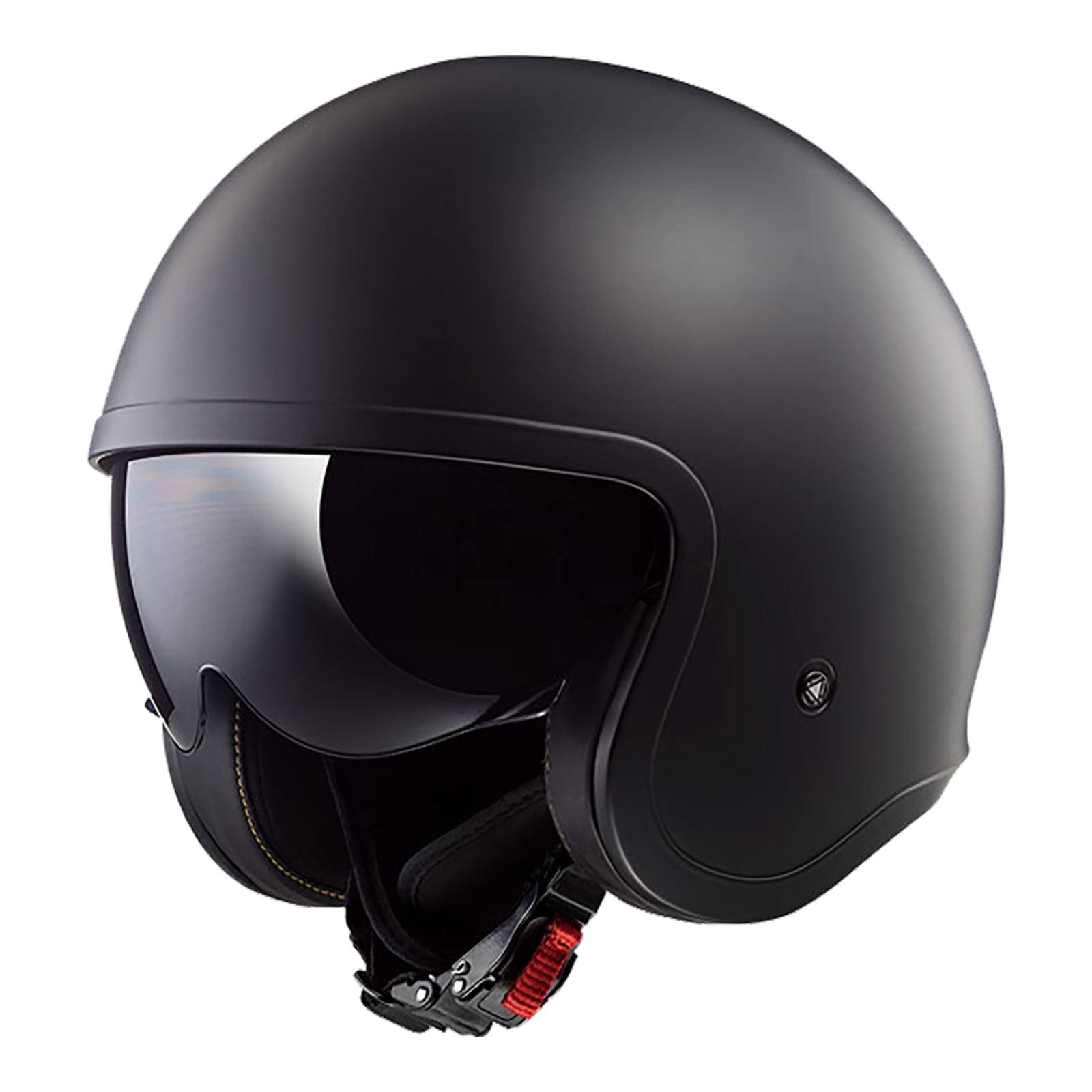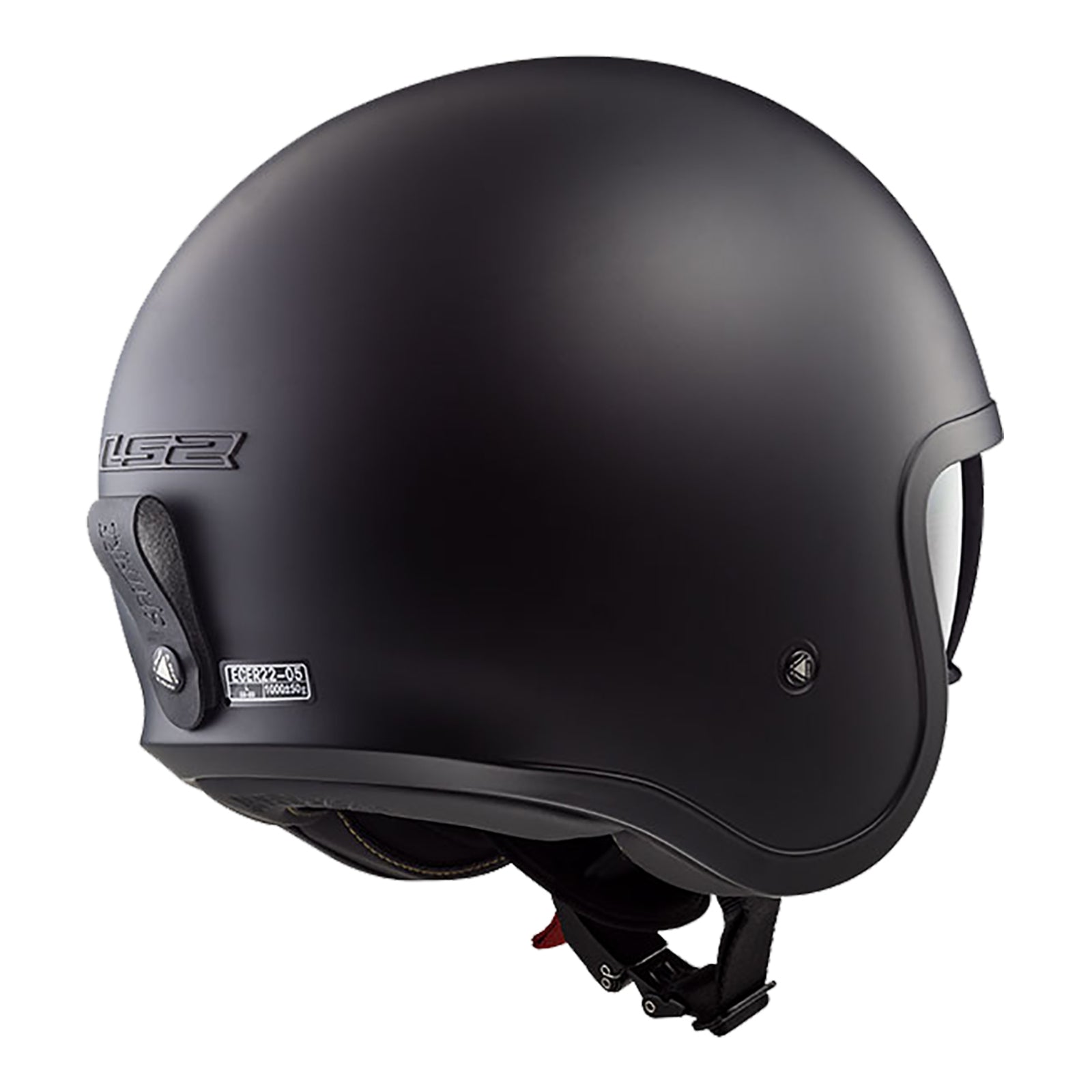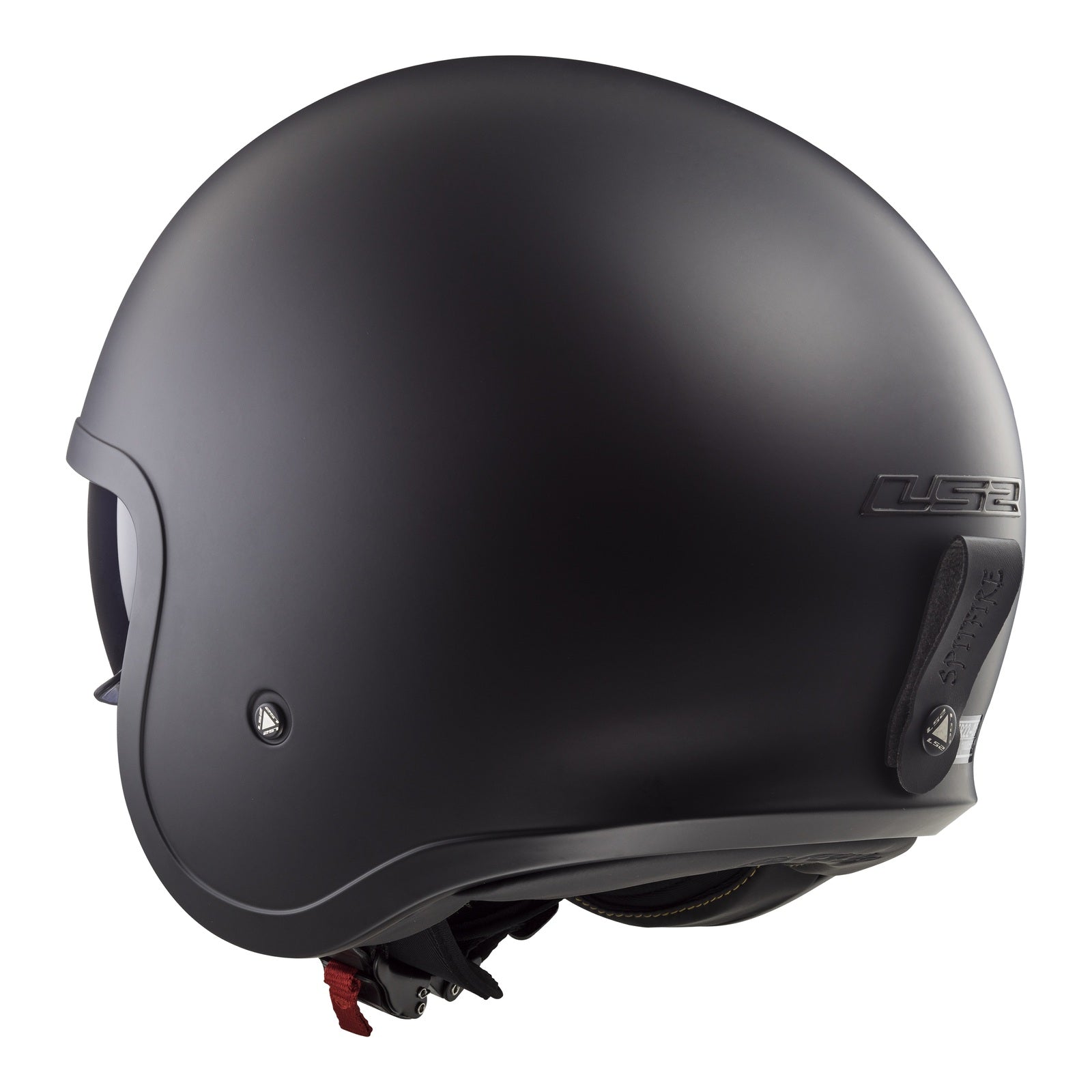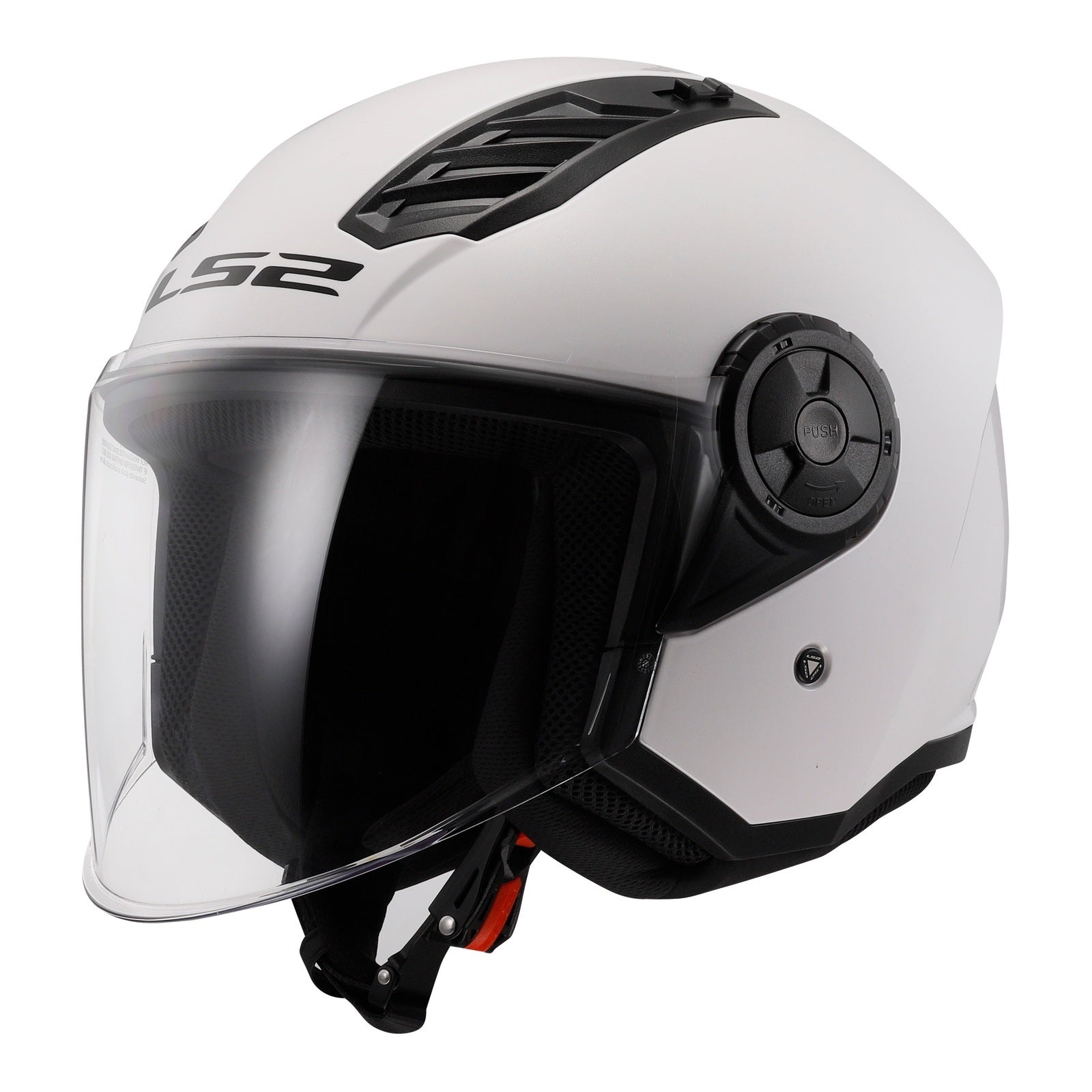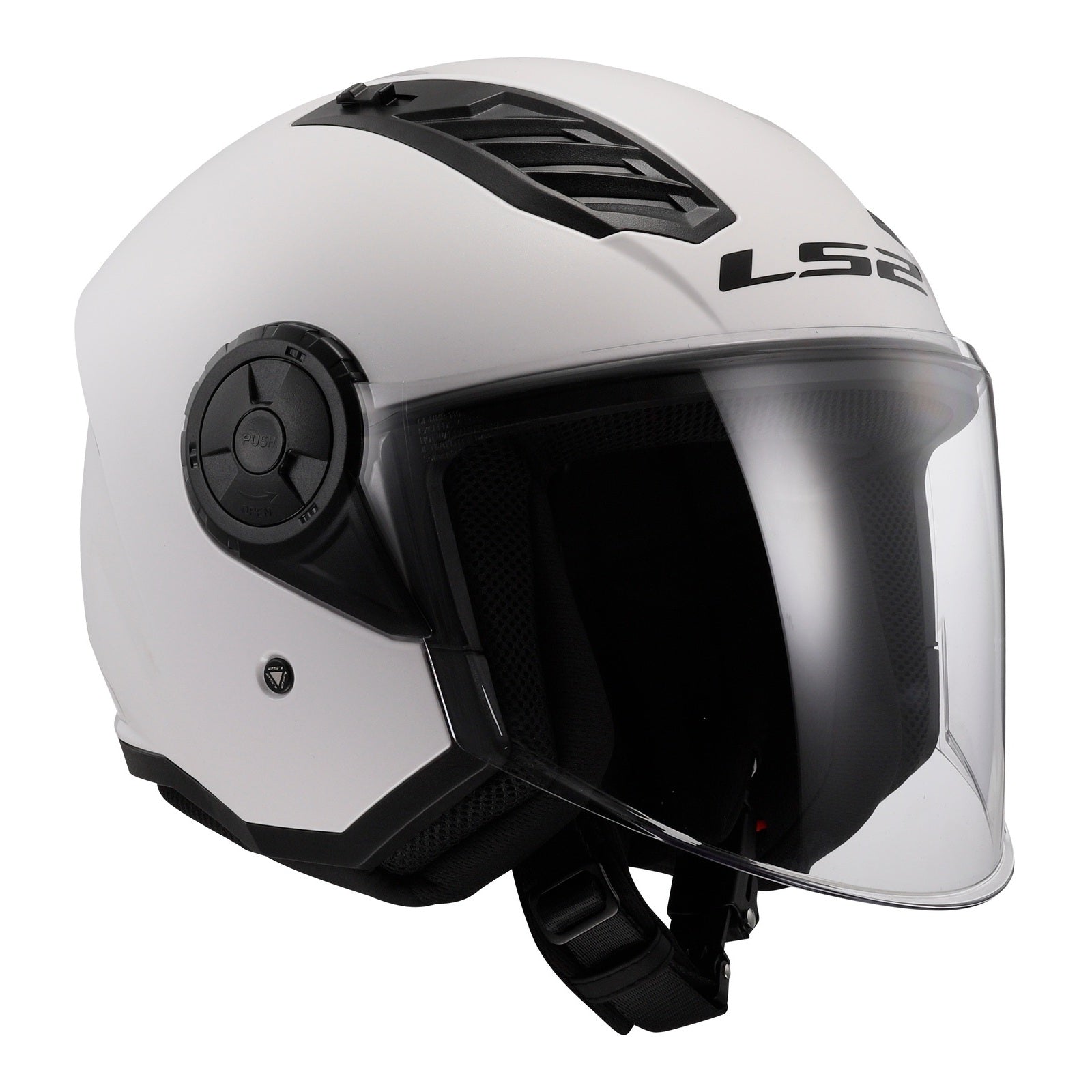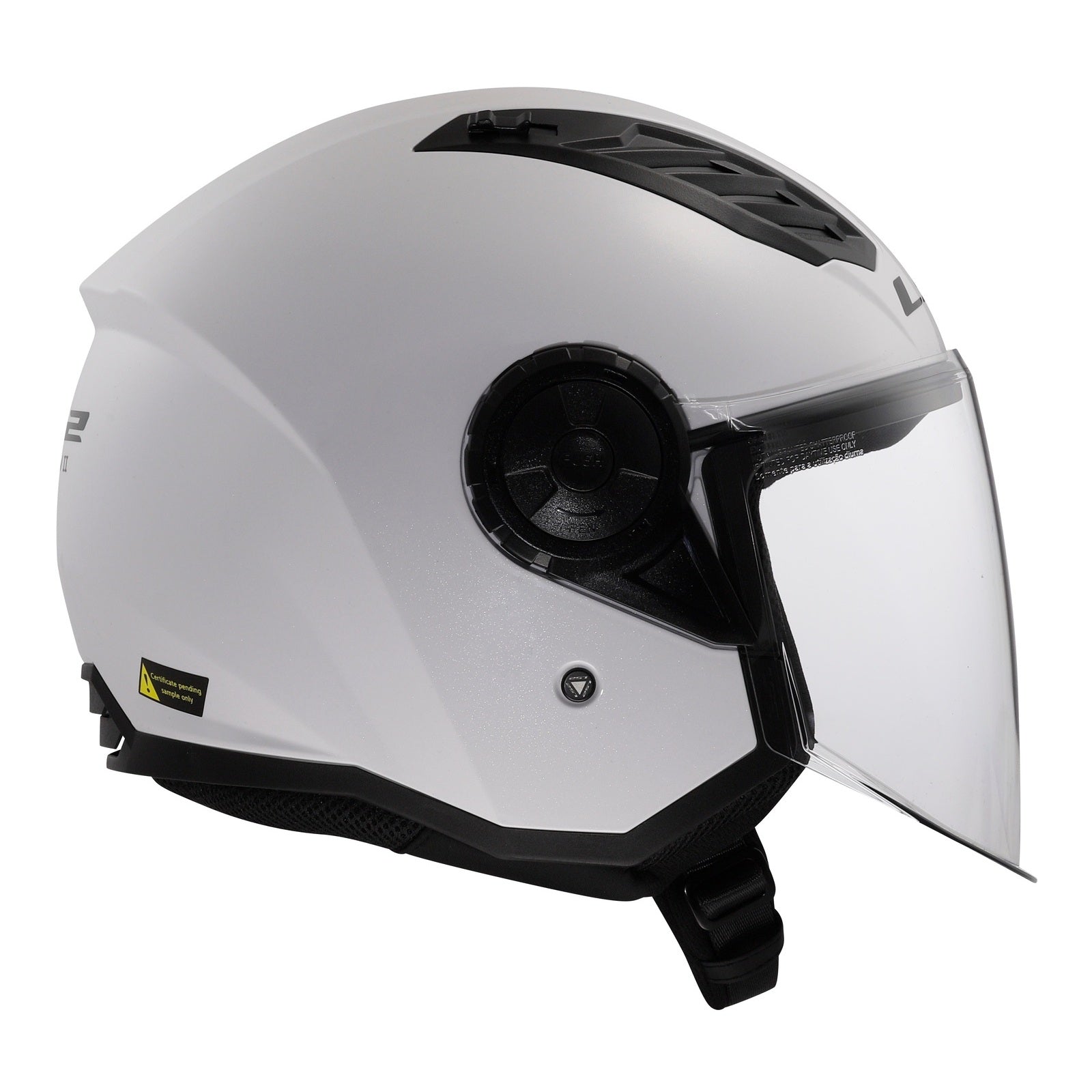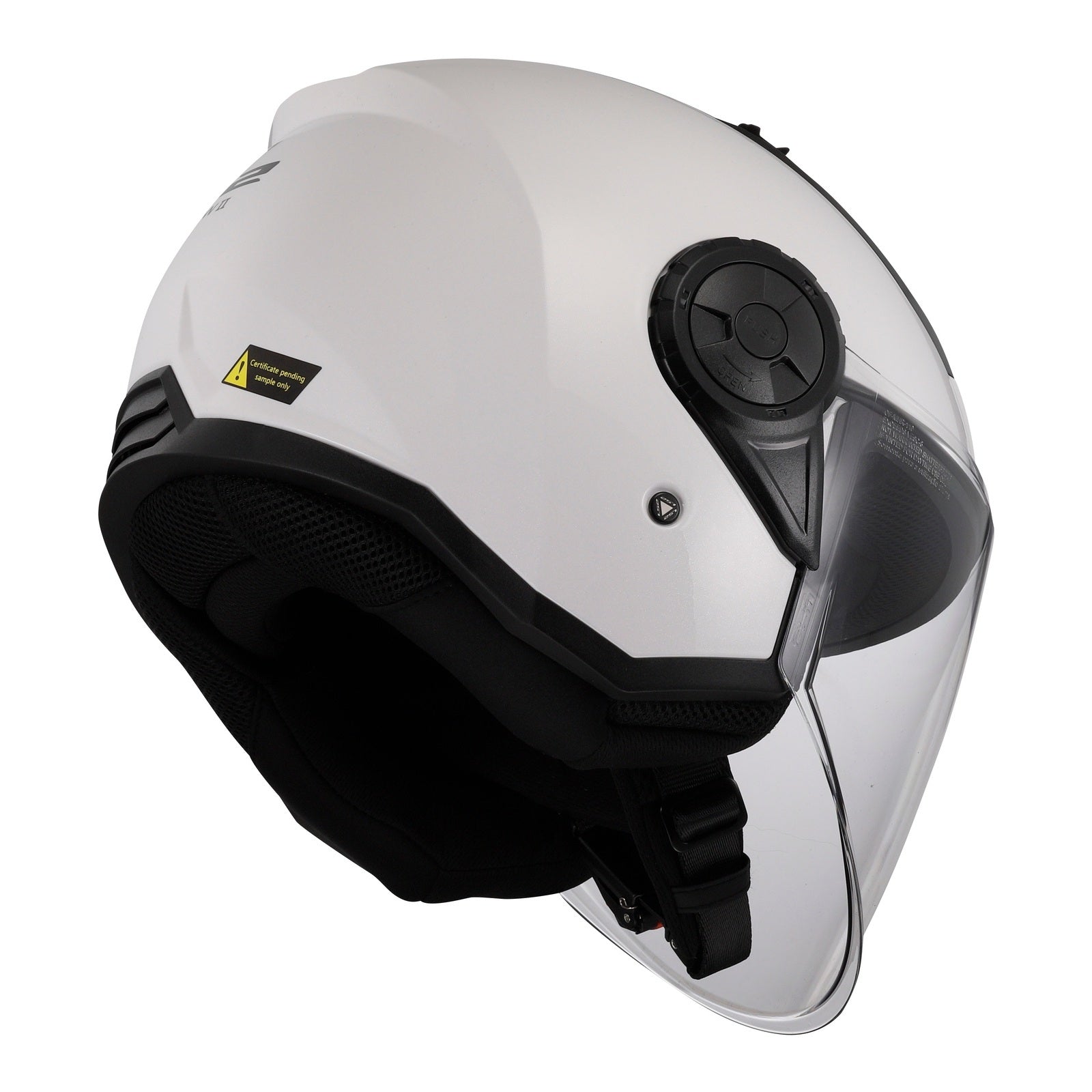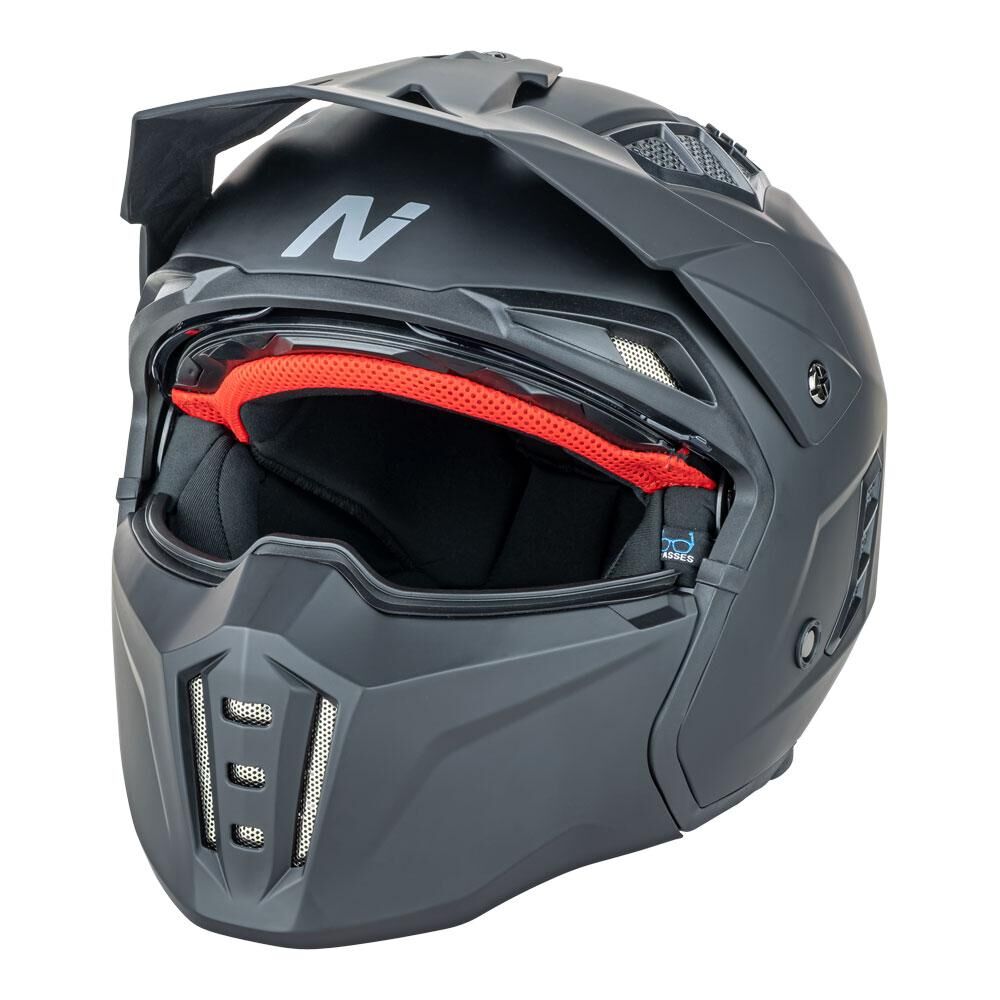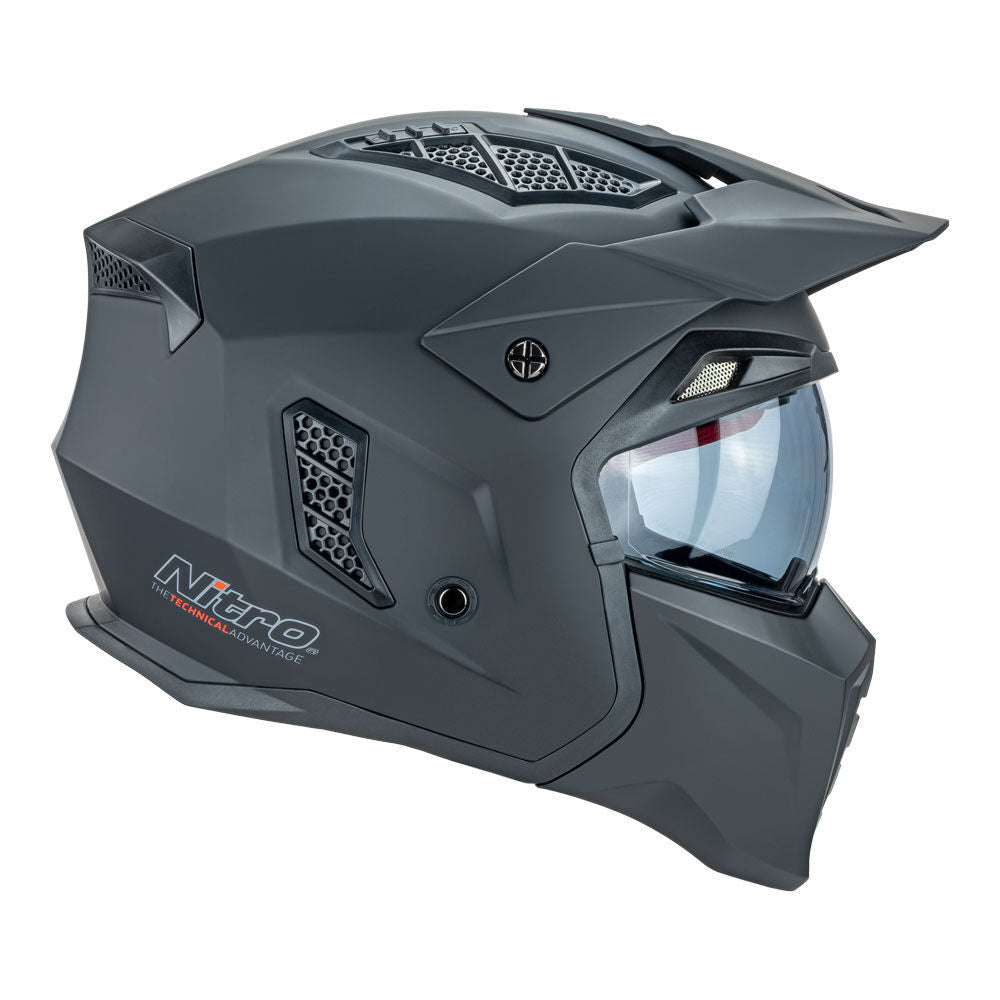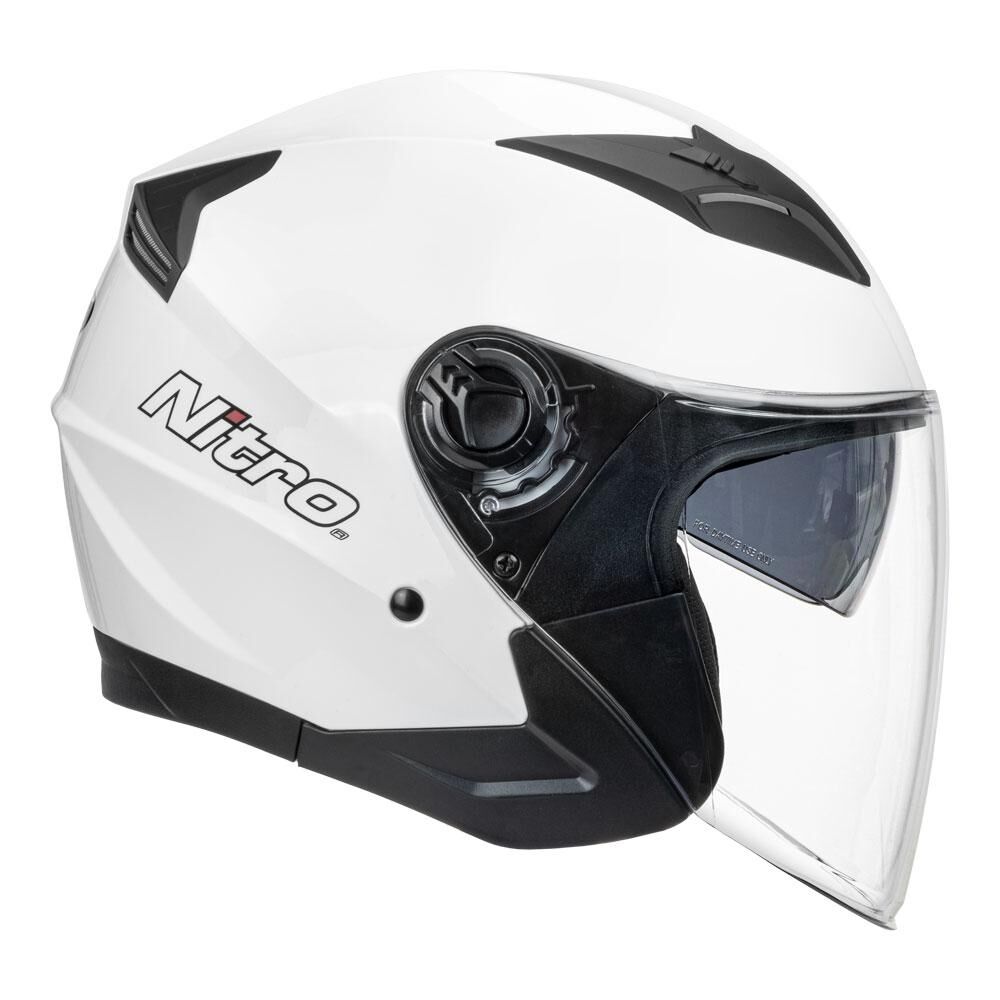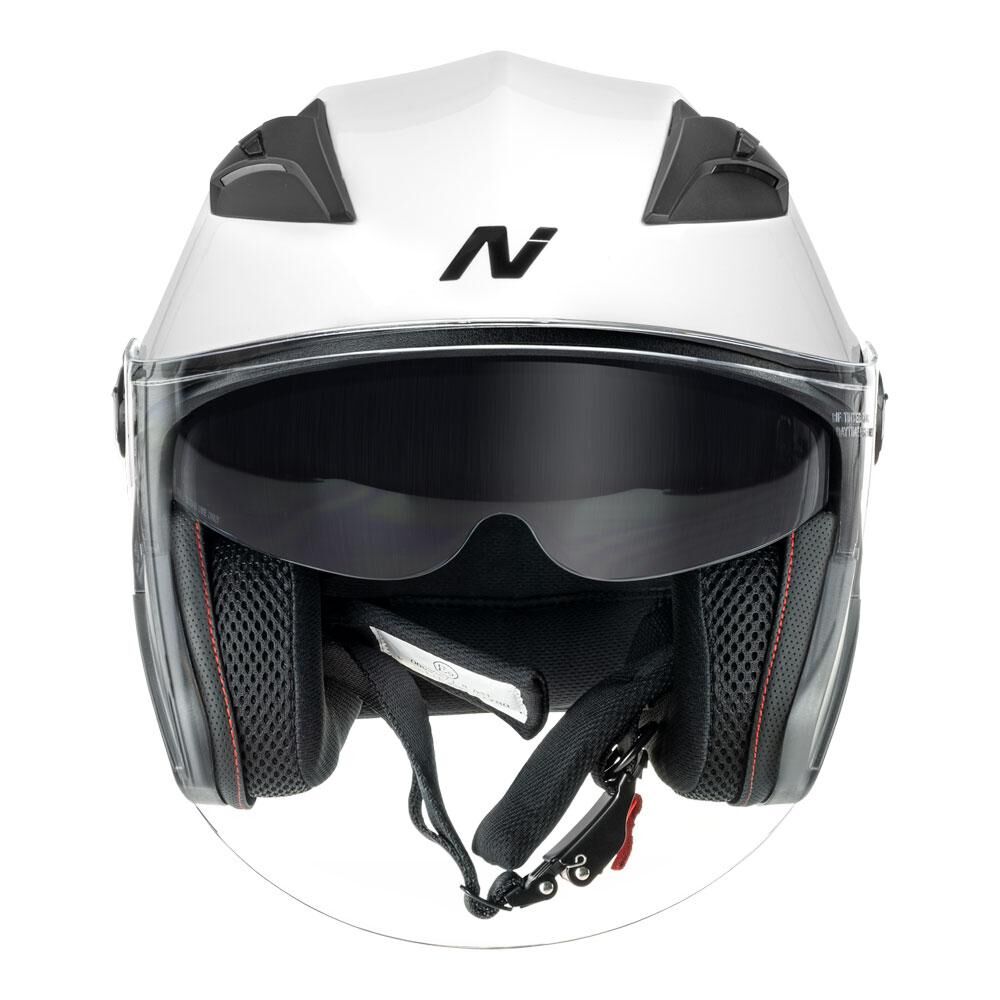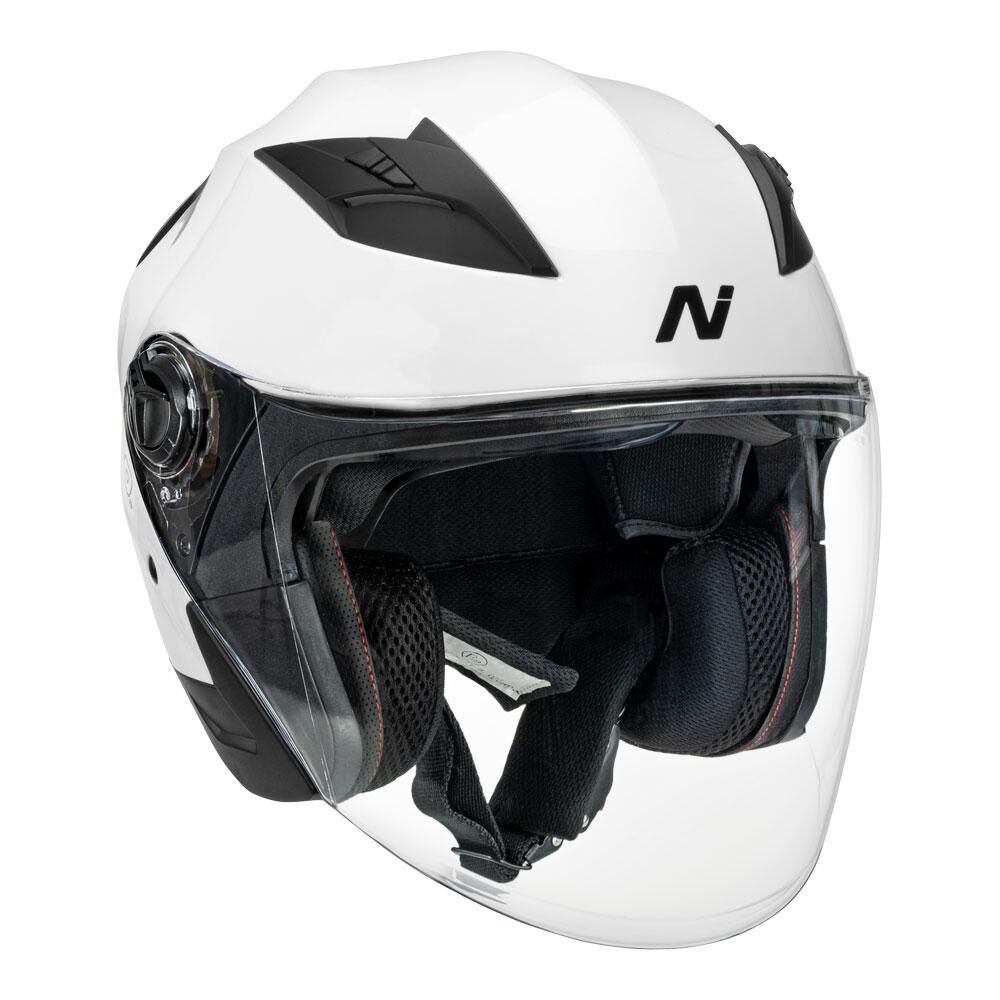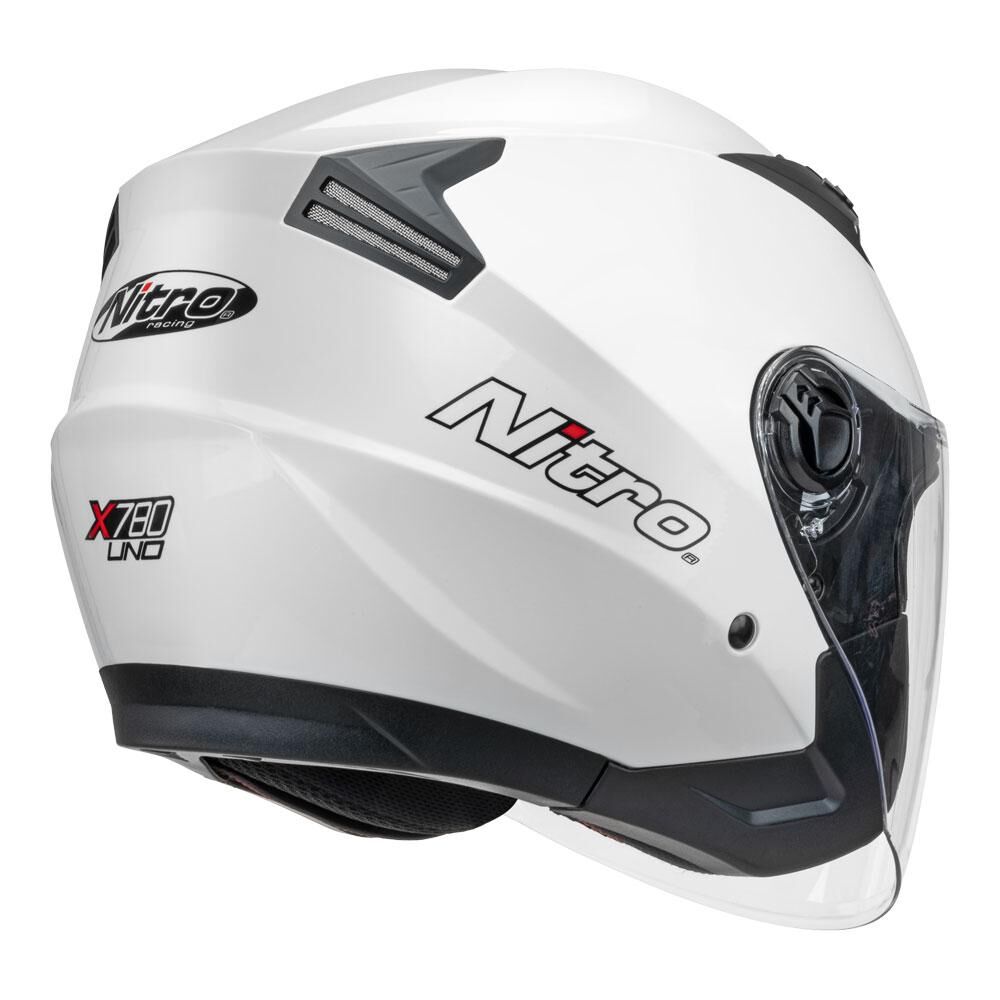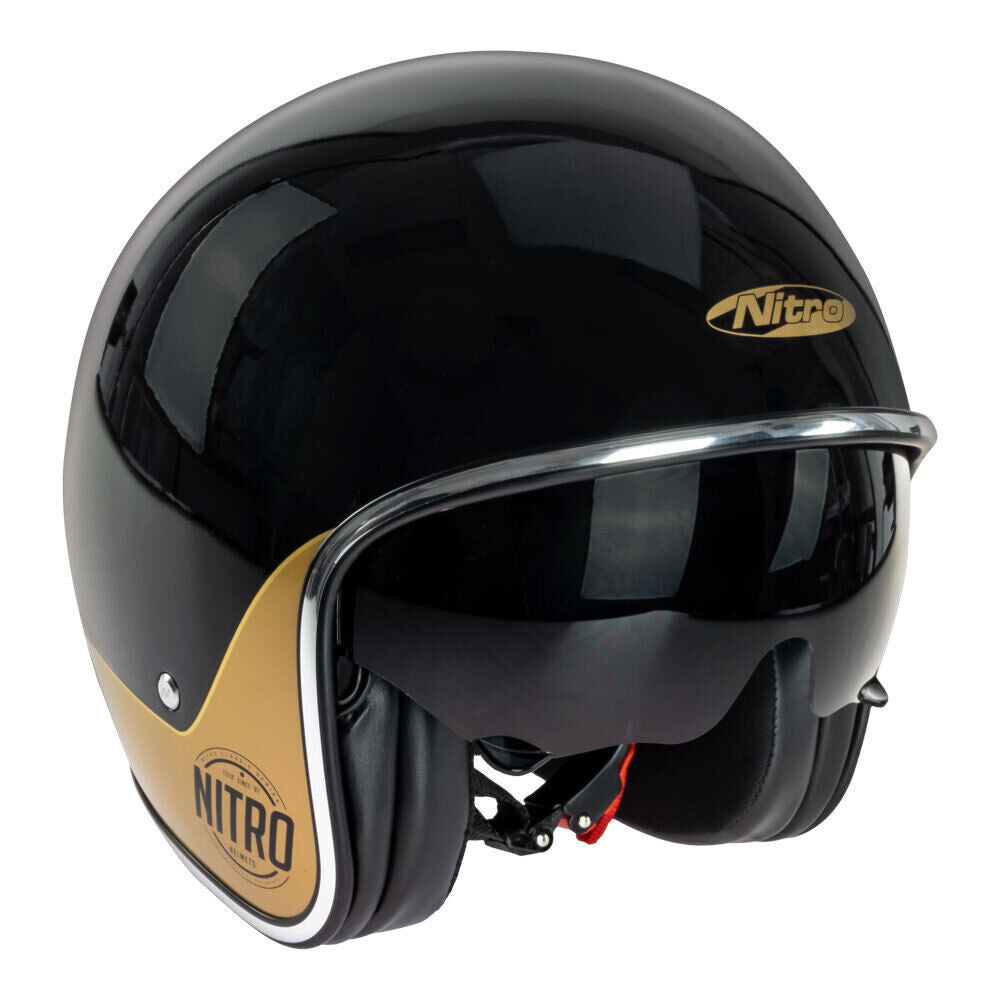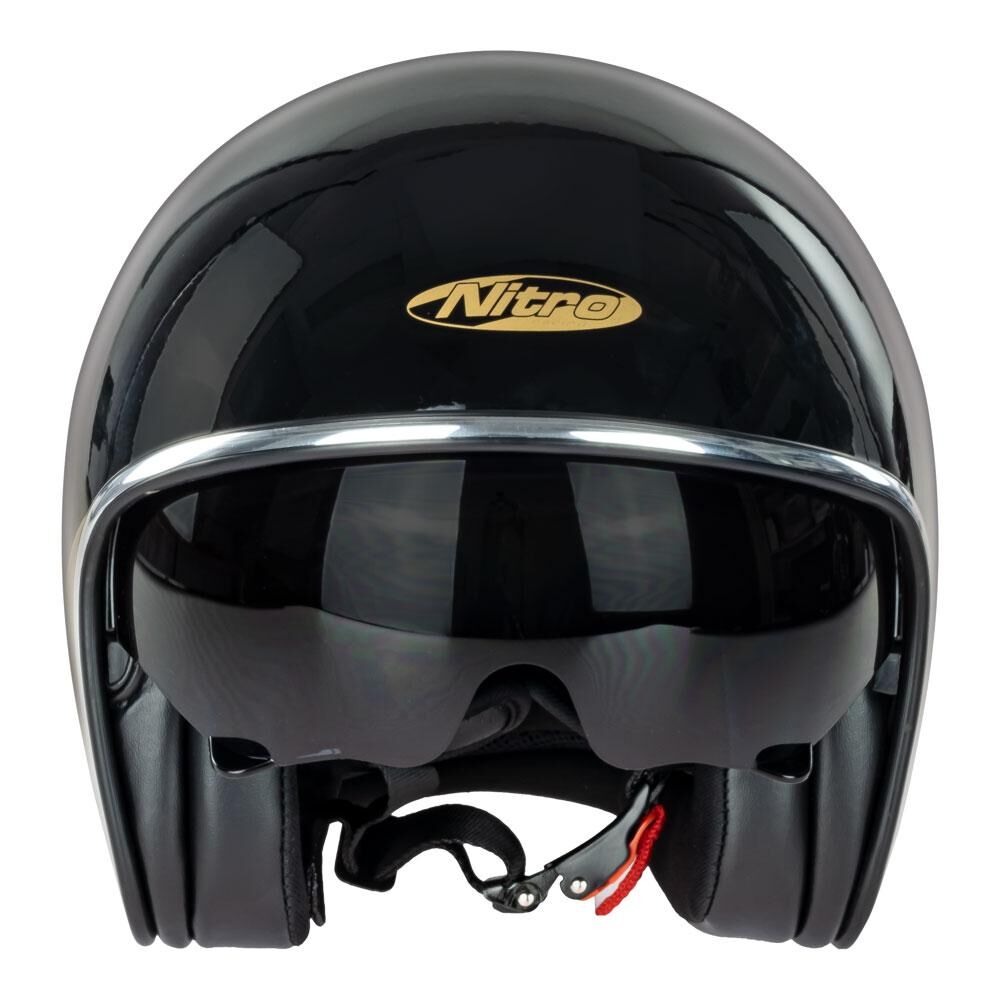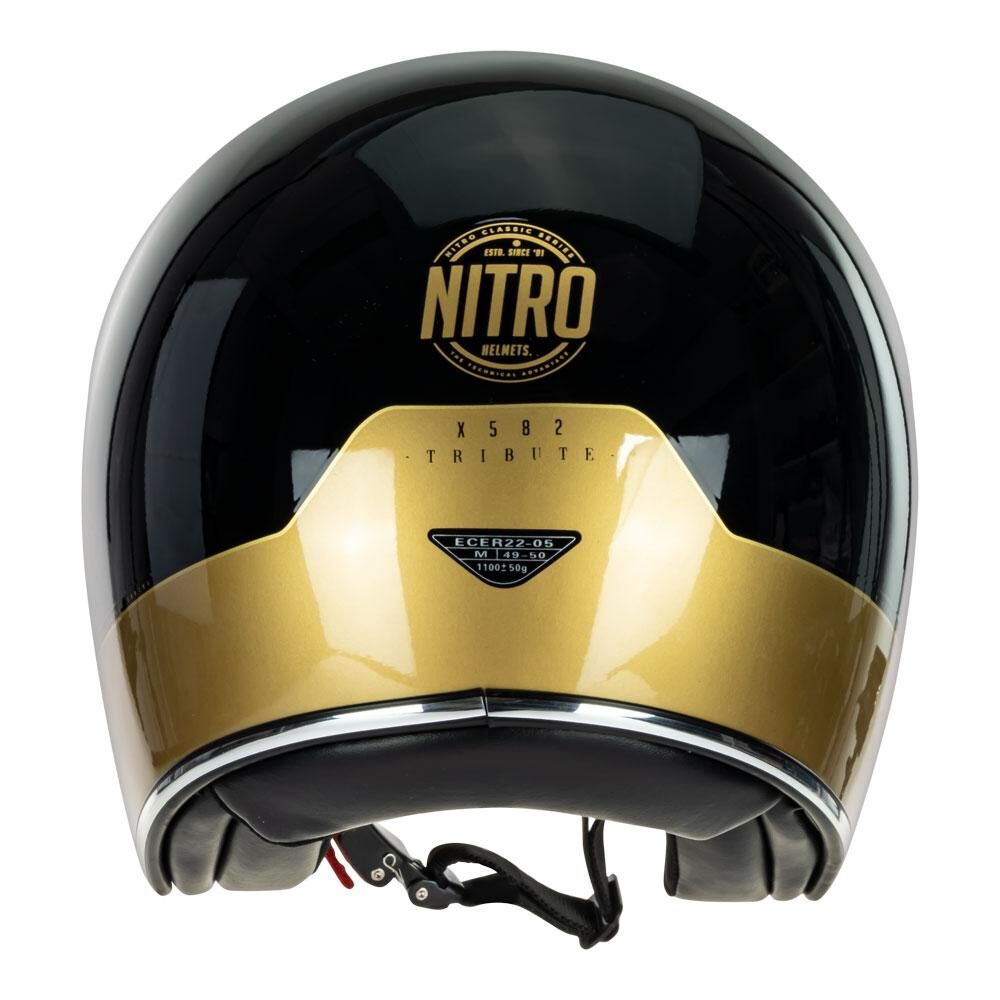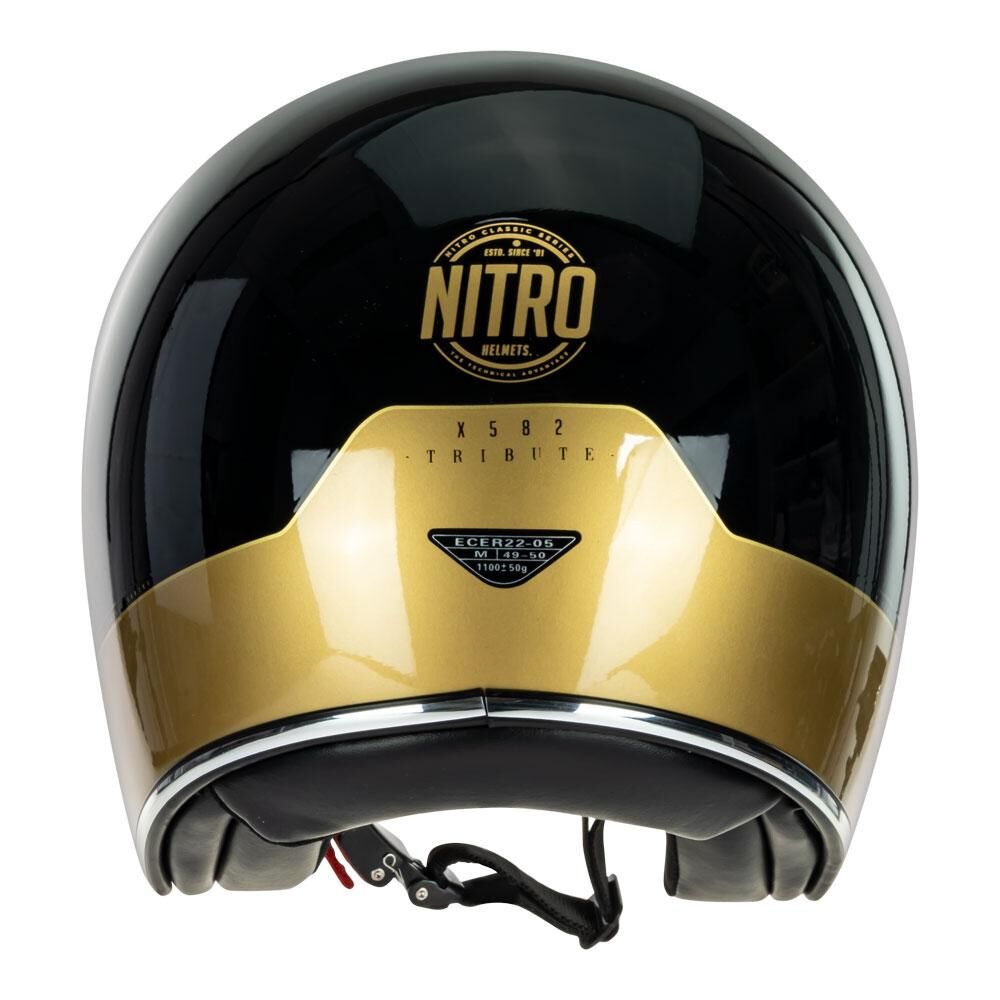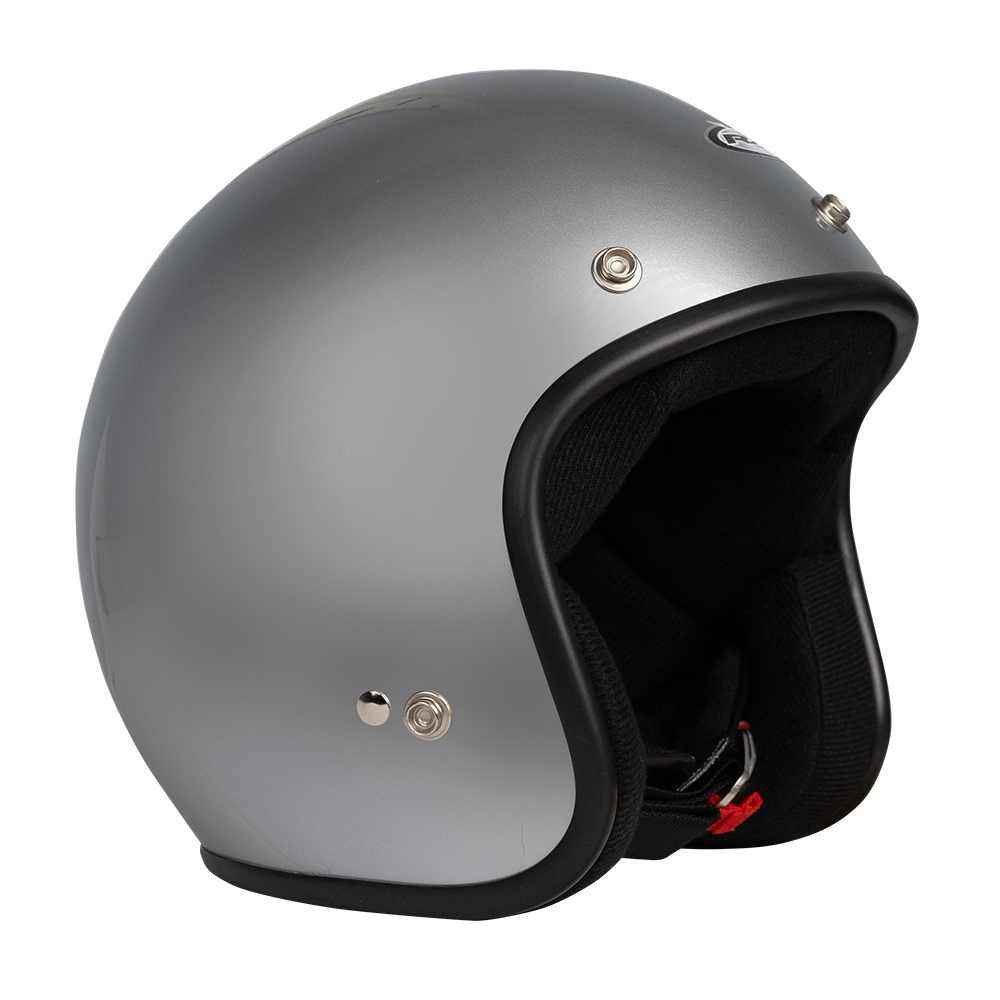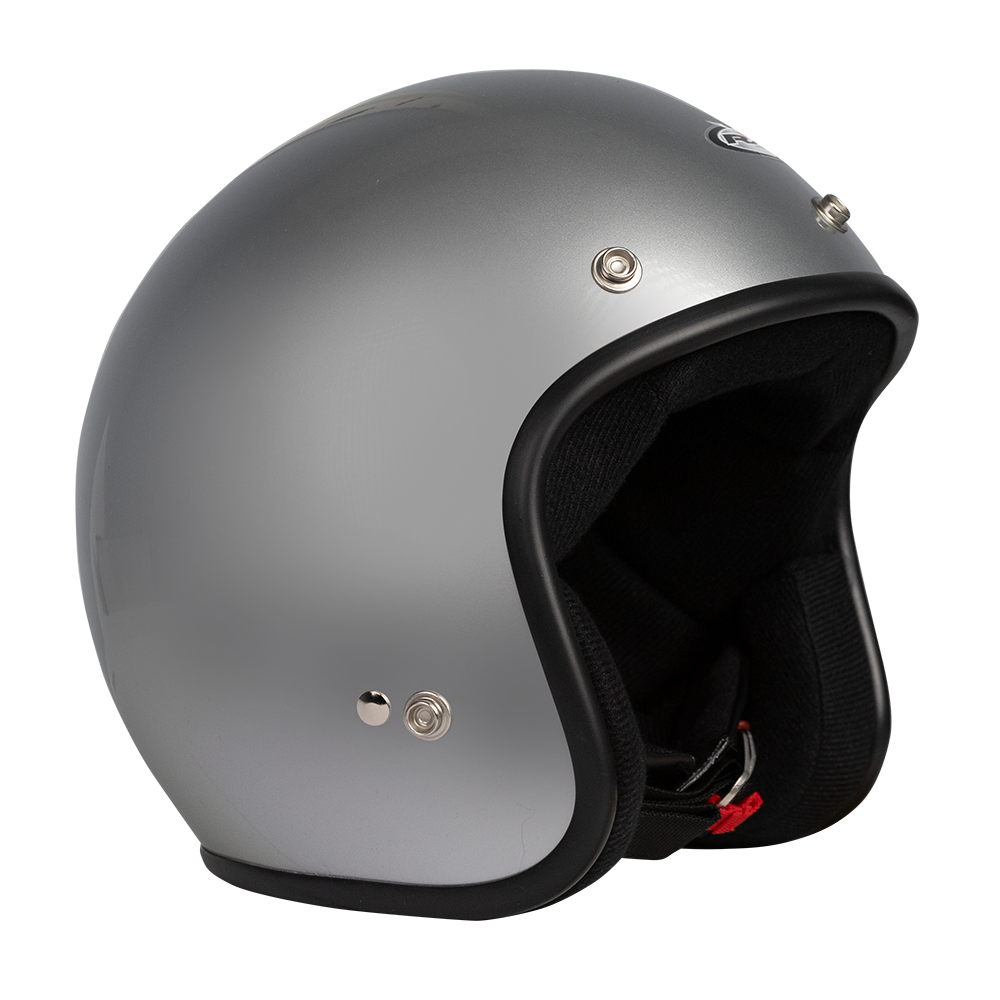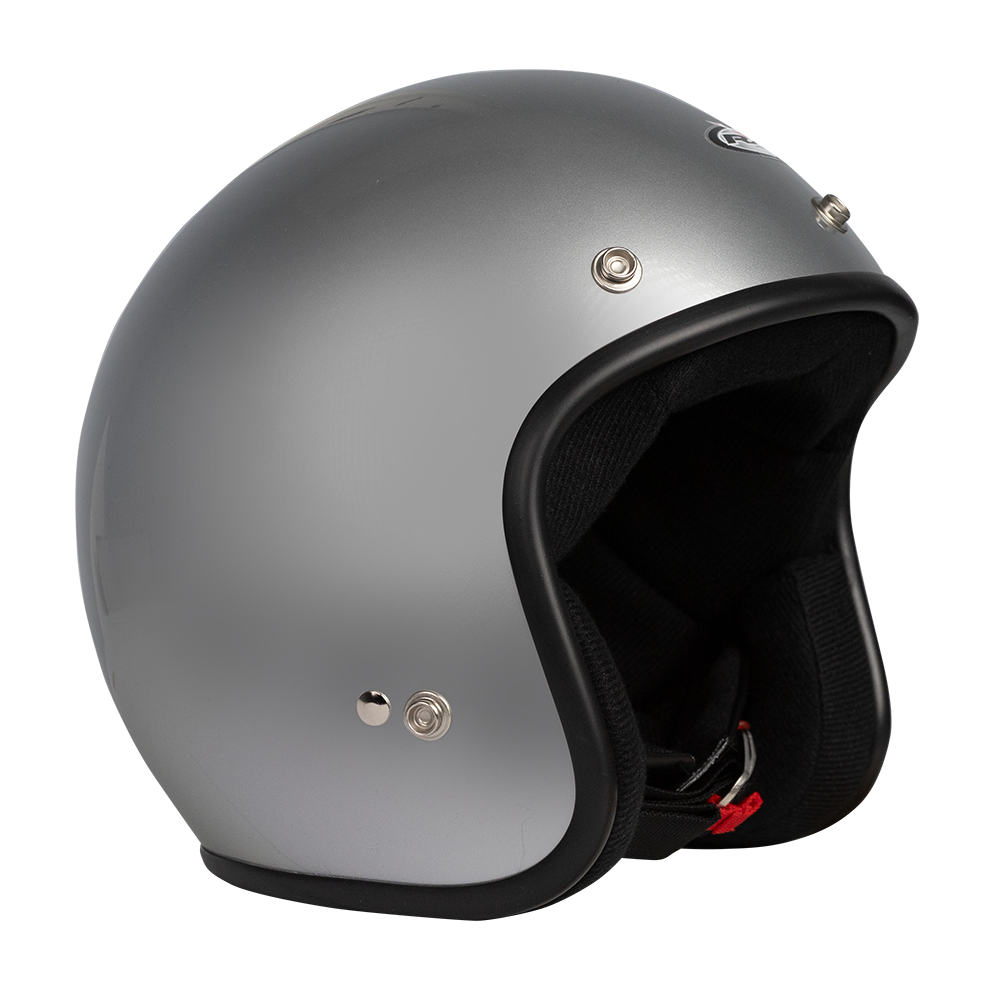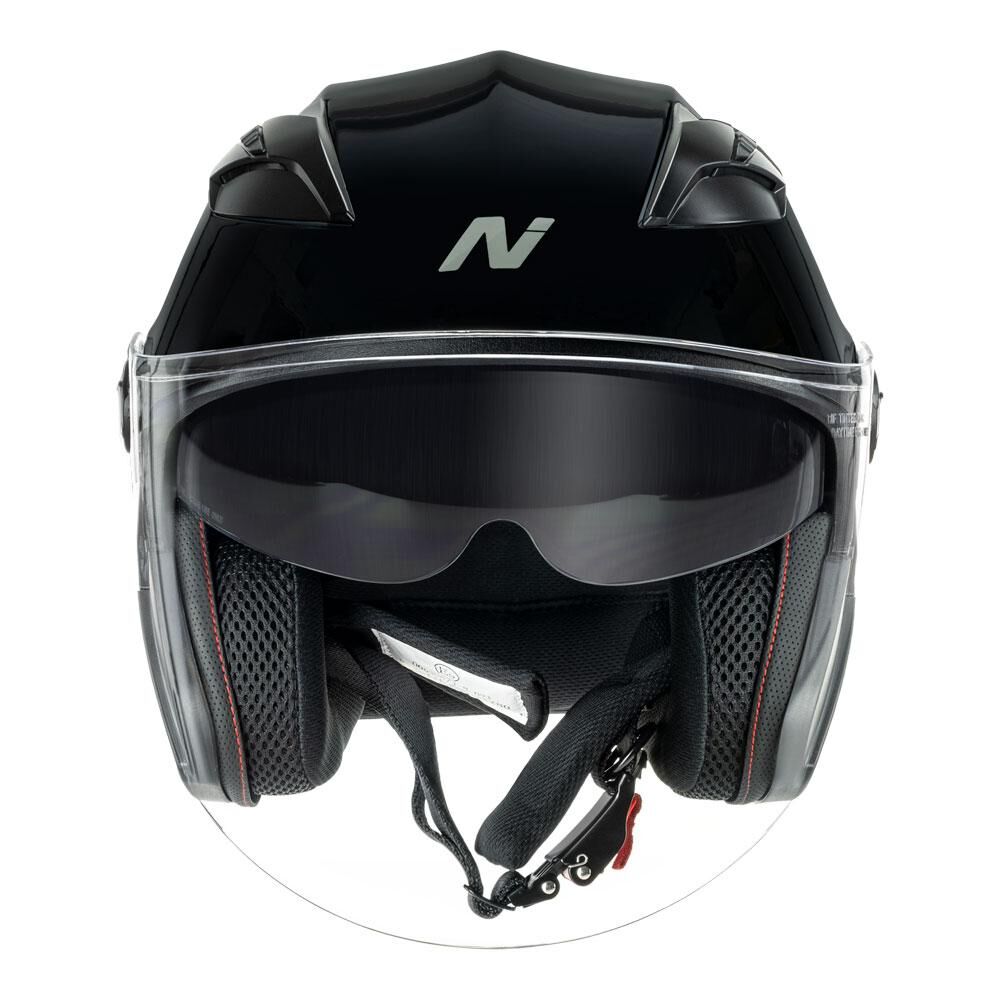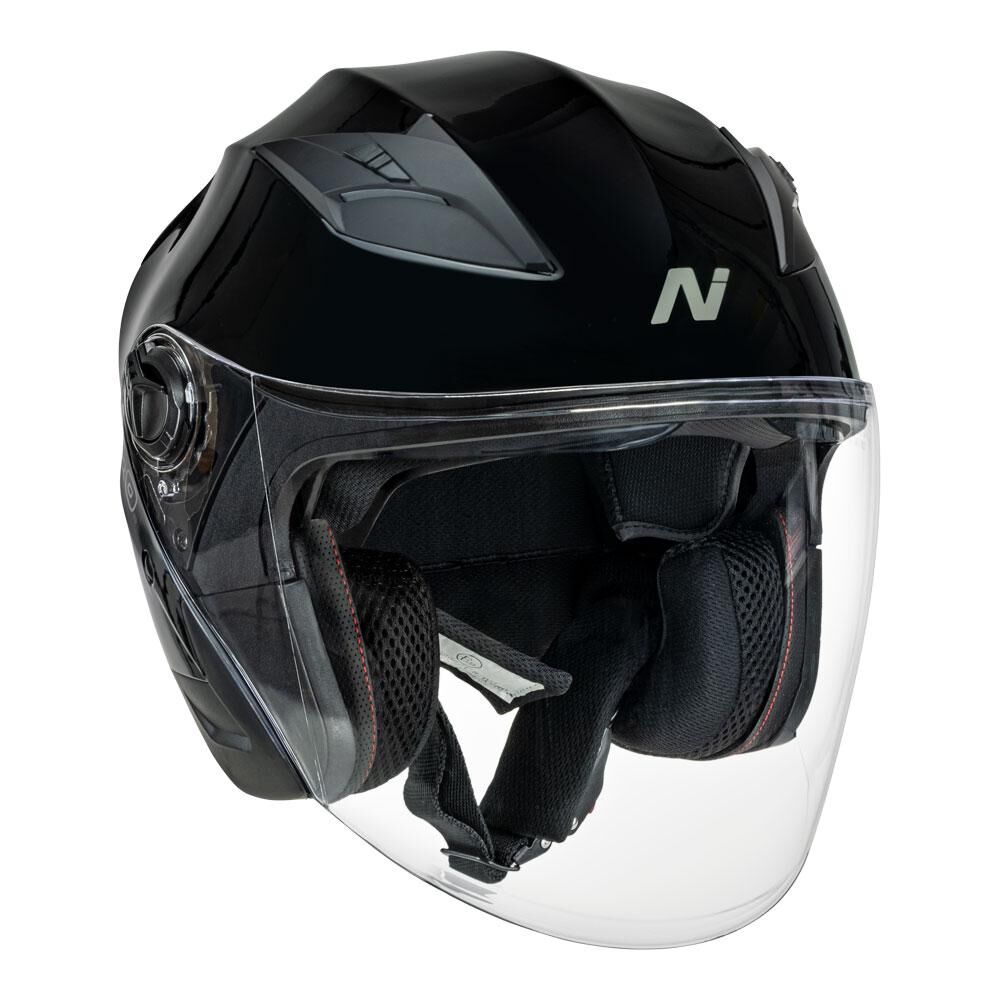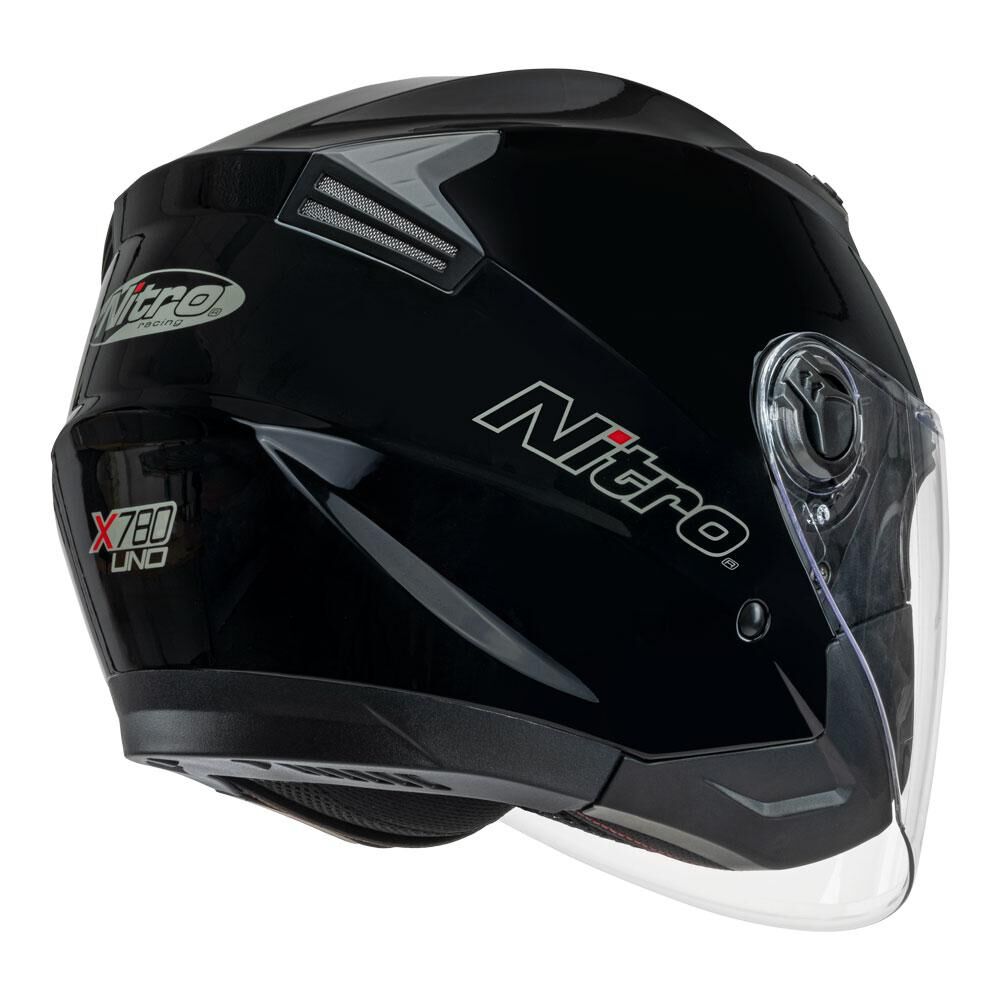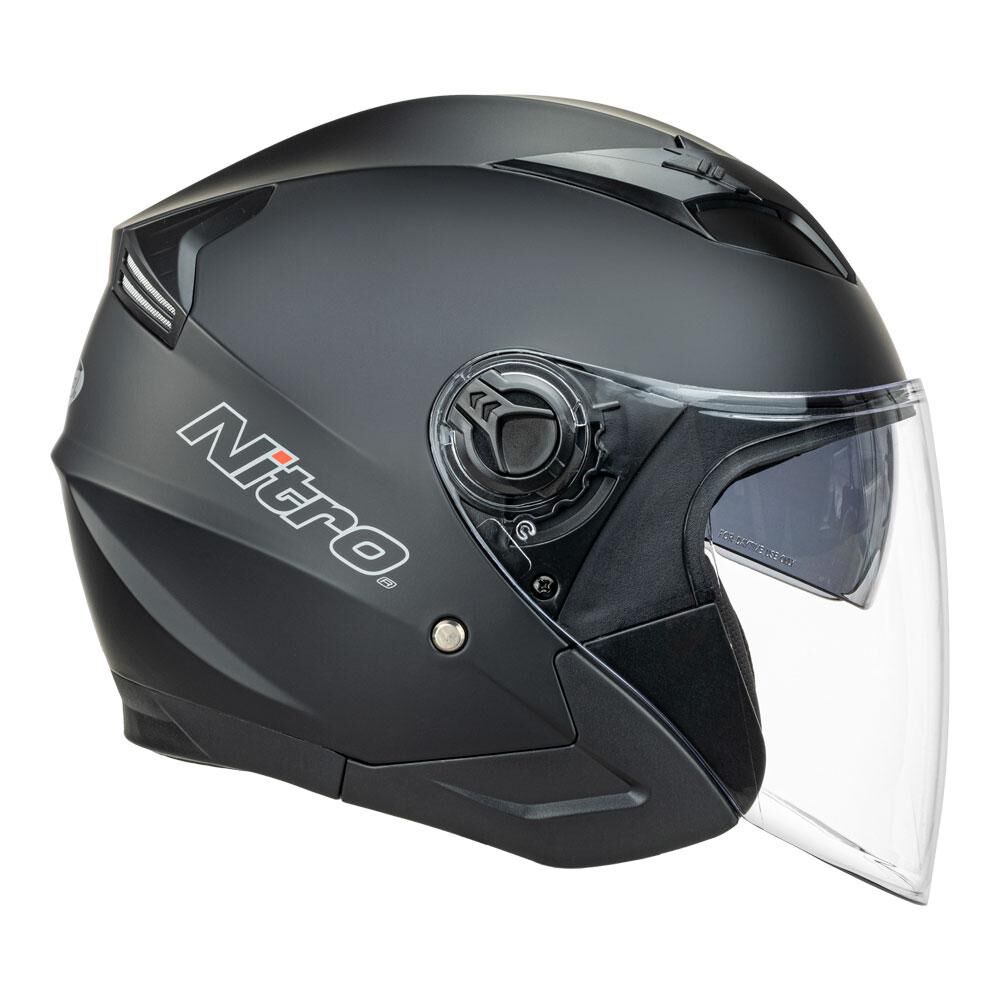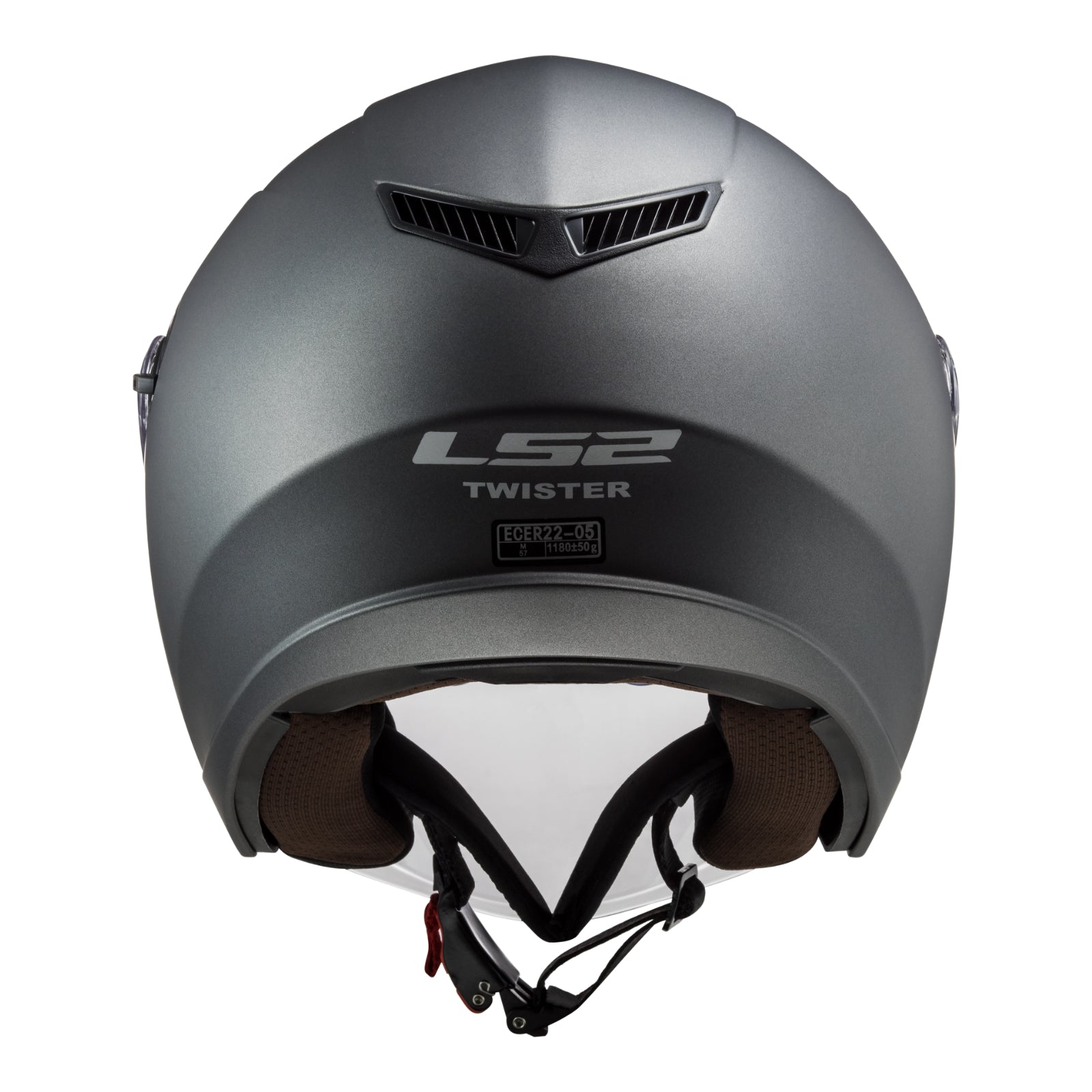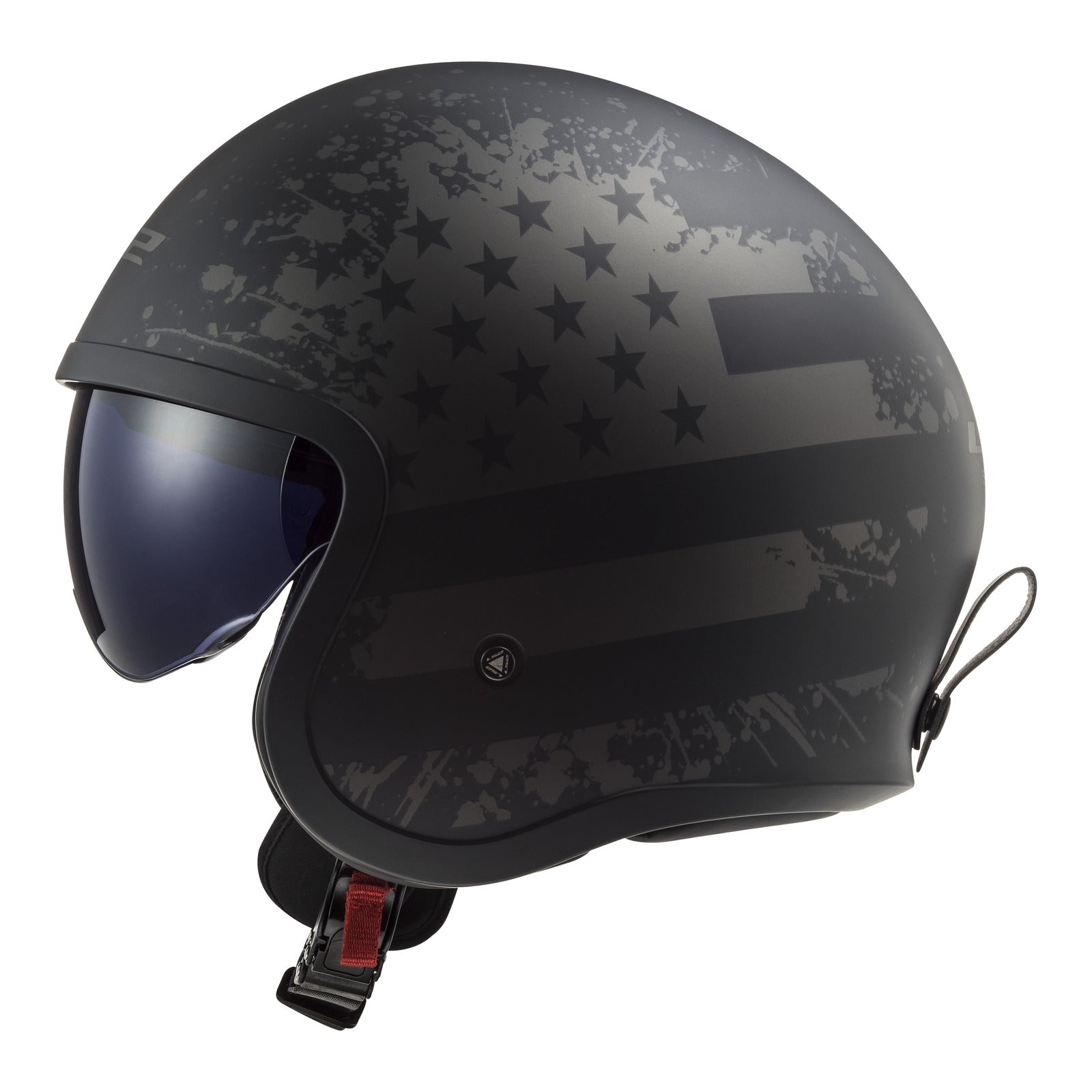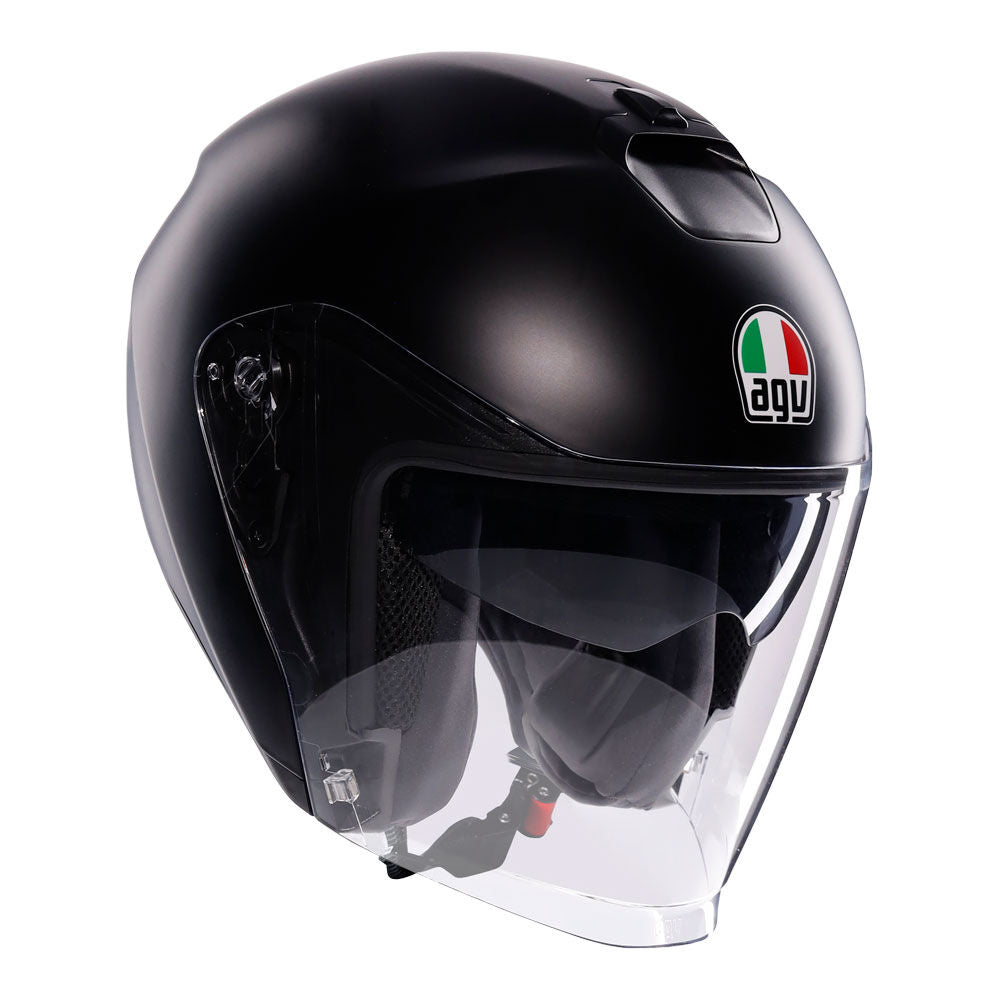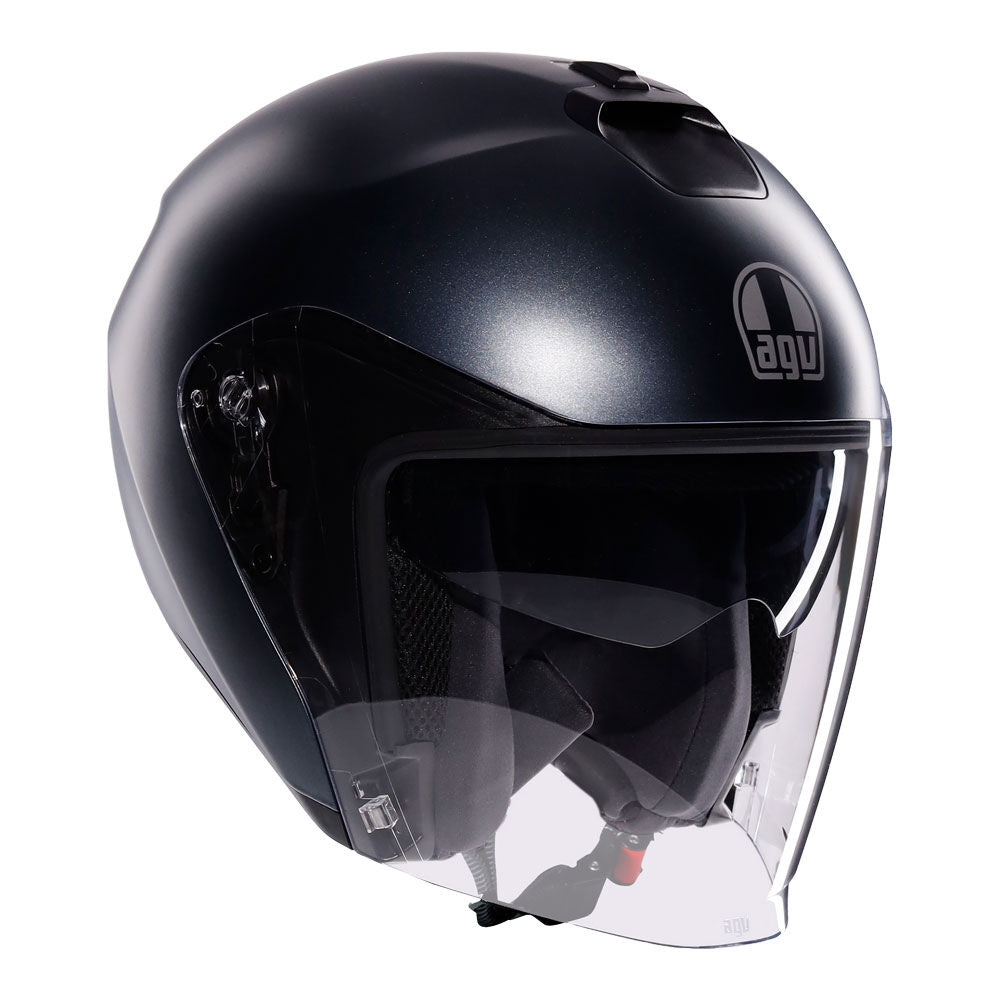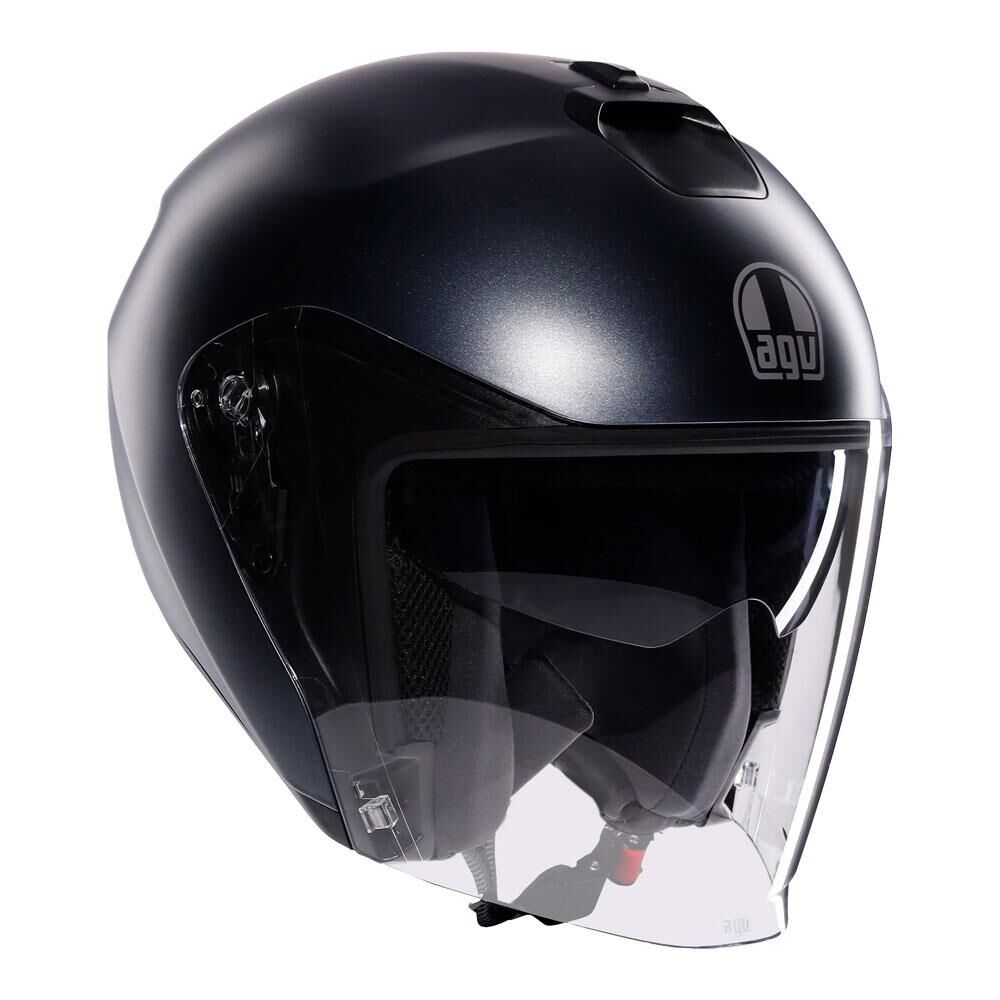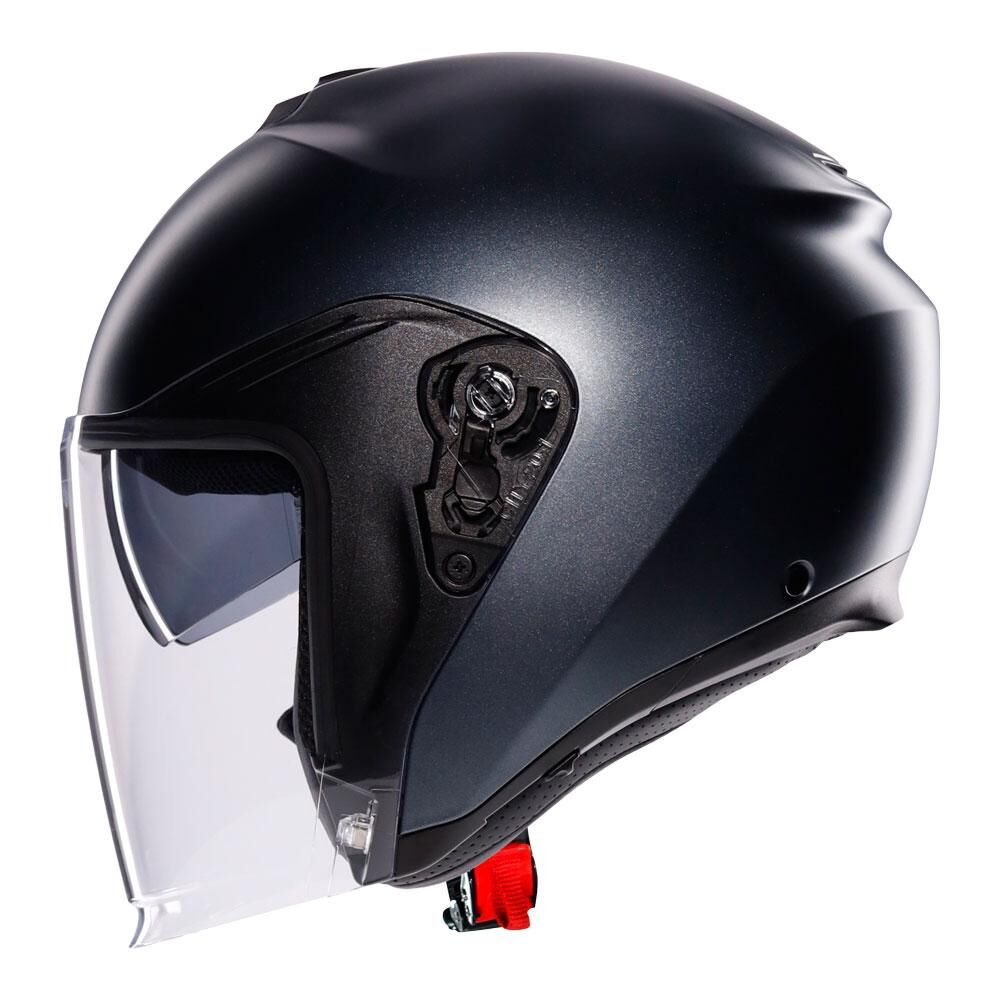
No chin bar. That's the trade-off. If you go down face-first, the chin and jaw take the hit and an open face cannot help you there. Riders pick them anyway for specific reasons: the widest field of vision of any lid on the road, cooler airflow on a Queensland summer afternoon, and the kind of all-day comfort that makes a full face feel heavy by 4pm. Open face is the natural lid for cruiser riders, cafe racers, vintage bike owners and short-distance commuters at sensible speeds.
We stock 48 open face motorbike helmets across AGV, Airoh, LS2, Nitro and RXT, from $79.95 entry lids up to $499.95 carbon J110s. Most current open face stock is ECE 22.06 certified; one AGV K5 Jet variant carries ECE 22.05 (see the comparison table below). Every lid on this page is either ECE or AS/NZS 1698 accepted for Australian road use.
Shop by type: AGV open face, LS2 open face, visors and goggles, all motorcycle helmets. Every helmet ships free Australia-wide over $200 from our Gold Coast warehouse.
How to pick an open face for your riding
Pick the lid for the riding you actually do. Open face is not a compromise. It is a deliberate choice, with specific use cases where it is the right tool.
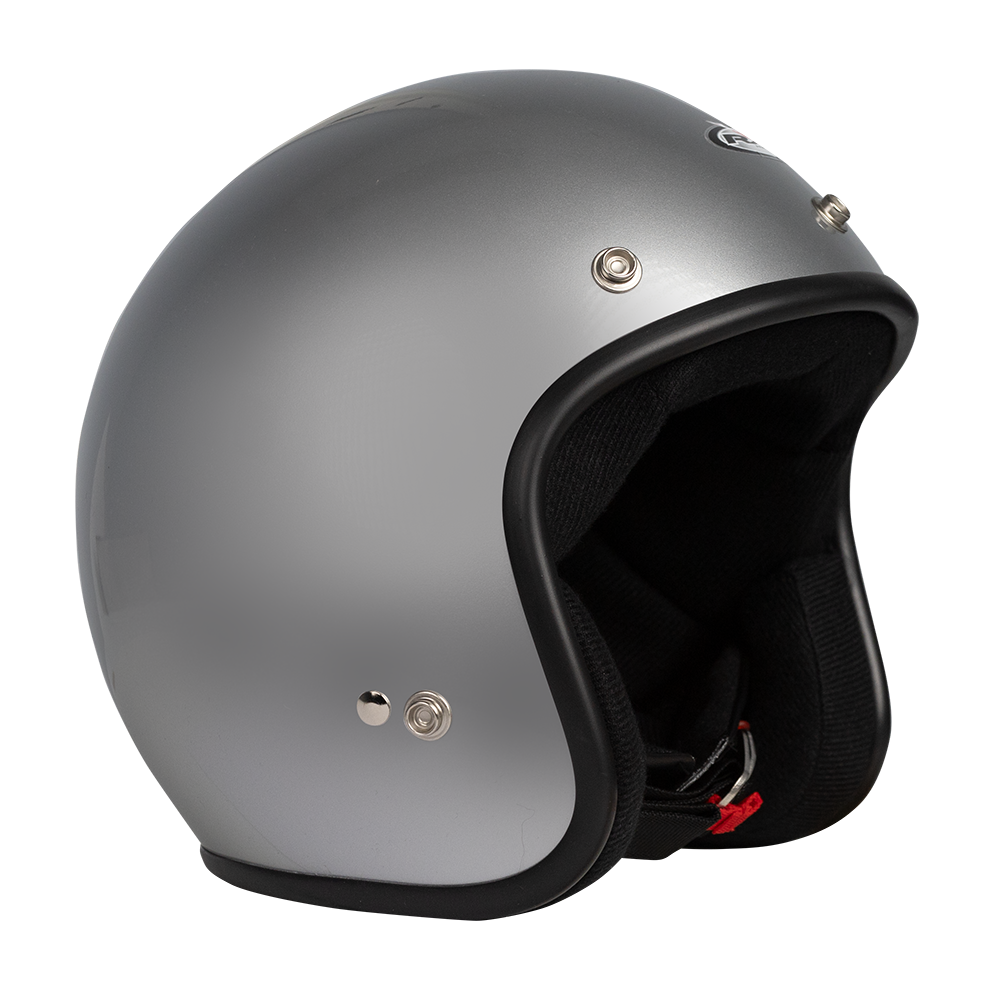
Cafe racer and classic bikes. This is the natural home of the open face. Shorter runs, lower speeds, style that matches the machine. The RXT Classic at RRP $129.95 (matt black, matt dark brown, matt silver, rusty and white Italy) is the budget pick for riders who want a round, old-school lid that does not look like a spaceship. For an Italian-flavour step up with ECE certification, the AGV Orbyt at RRP $199 is the entry-level AGV with thermoplastic shell and eyeglass-friendly fit.
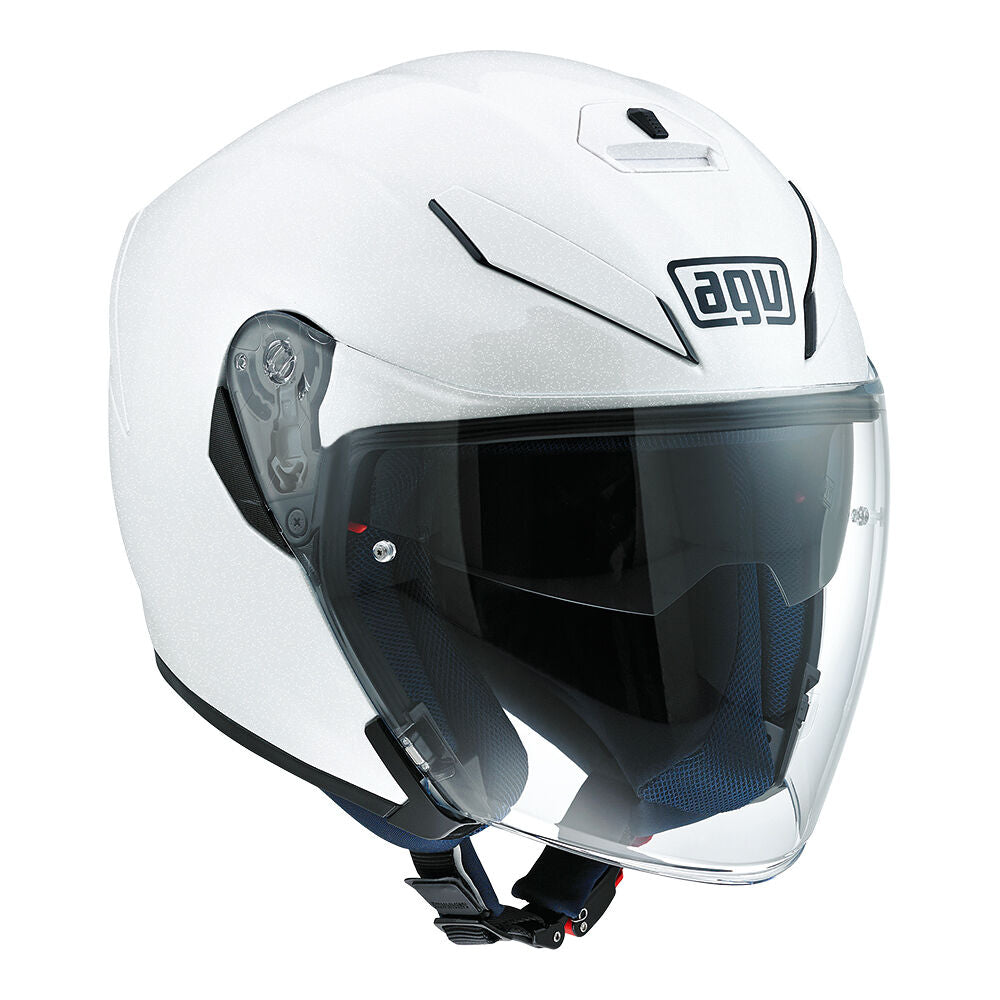
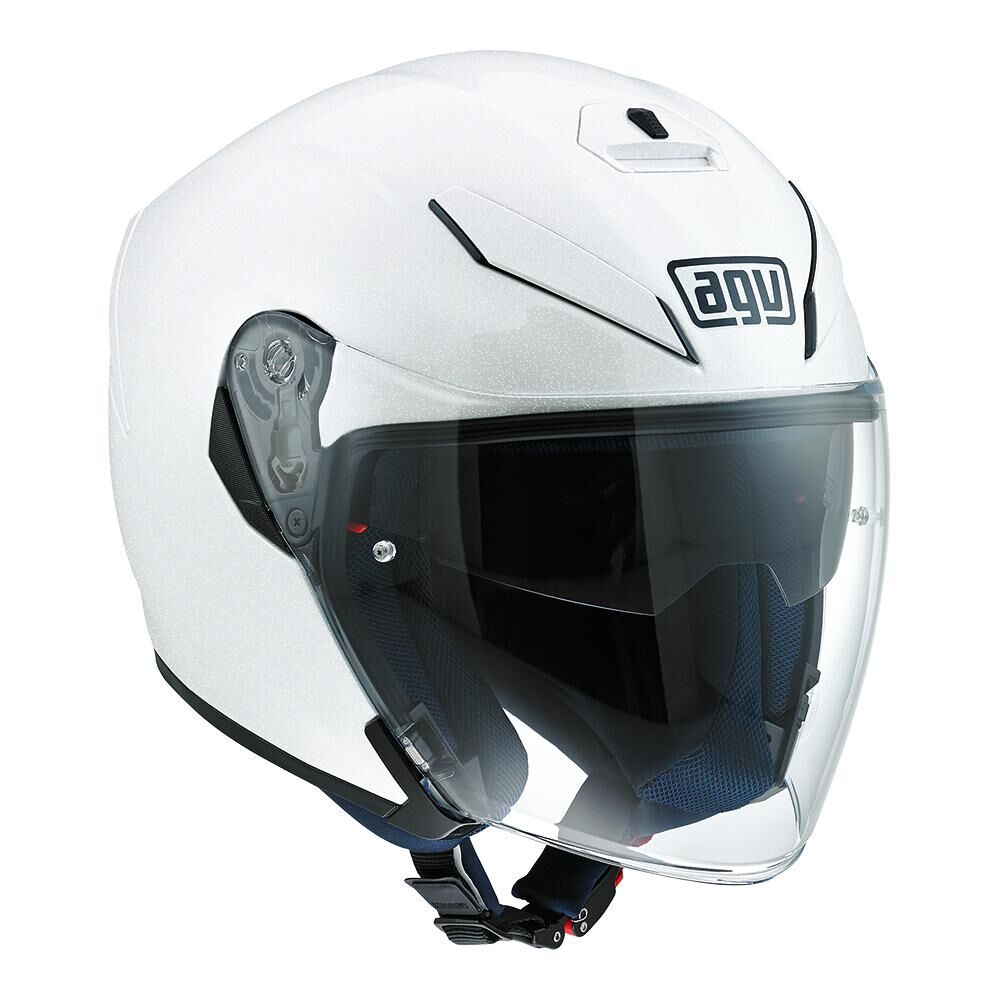
Cruiser riders. Touring at highway speeds in an open face is fine. Wind noise is the problem, not the lid. The RXT Stone Classic Stripe at RRP $239.95 is a proper cruiser lid at a fair price, and the RXT Metro Retro range ($139.95) sits on the mid-shelf for riders who want colourway options without spending half the week's wages. For a drop-down sun visor and a composite shell, the AGV K5 Jet at RRP $369 is the go-to.
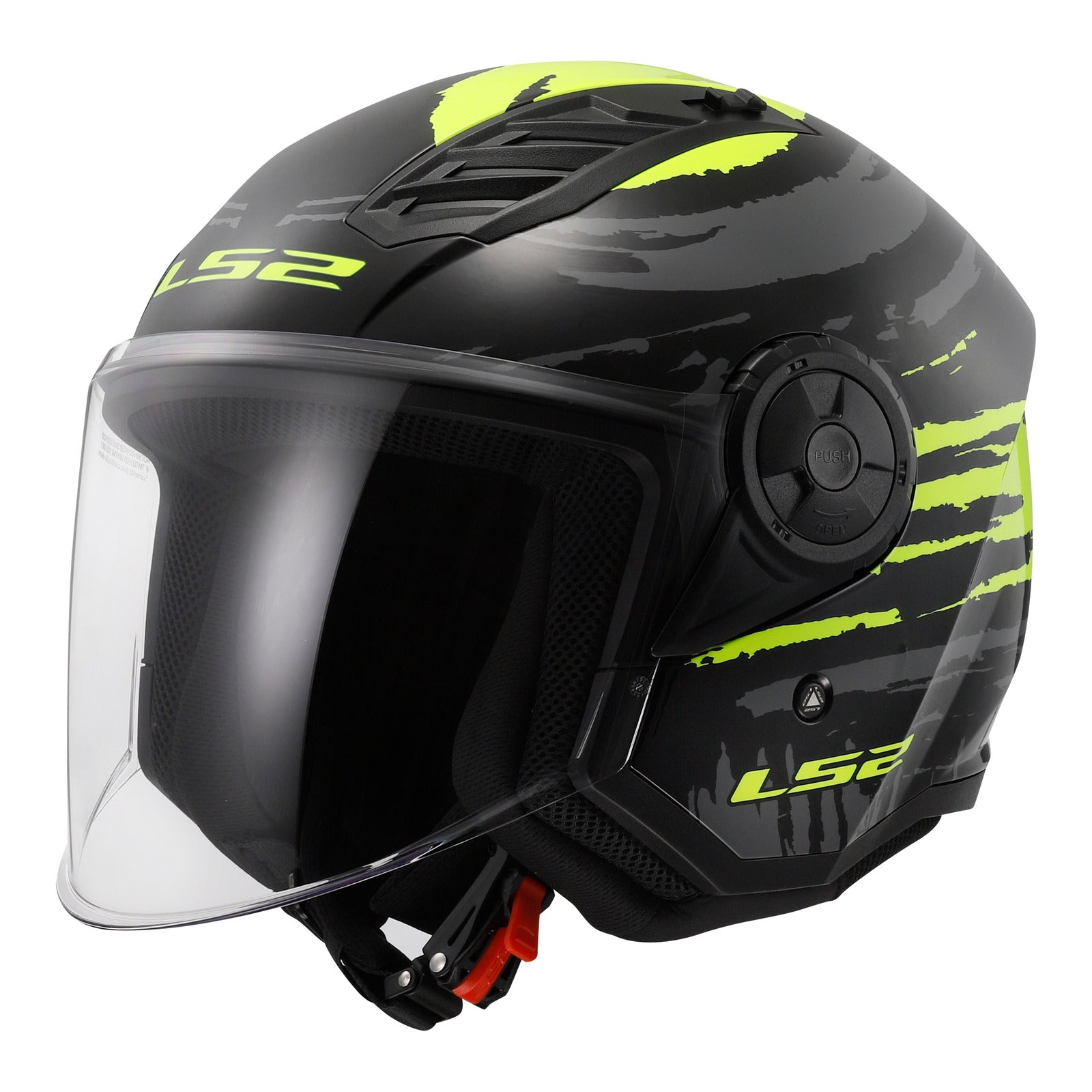
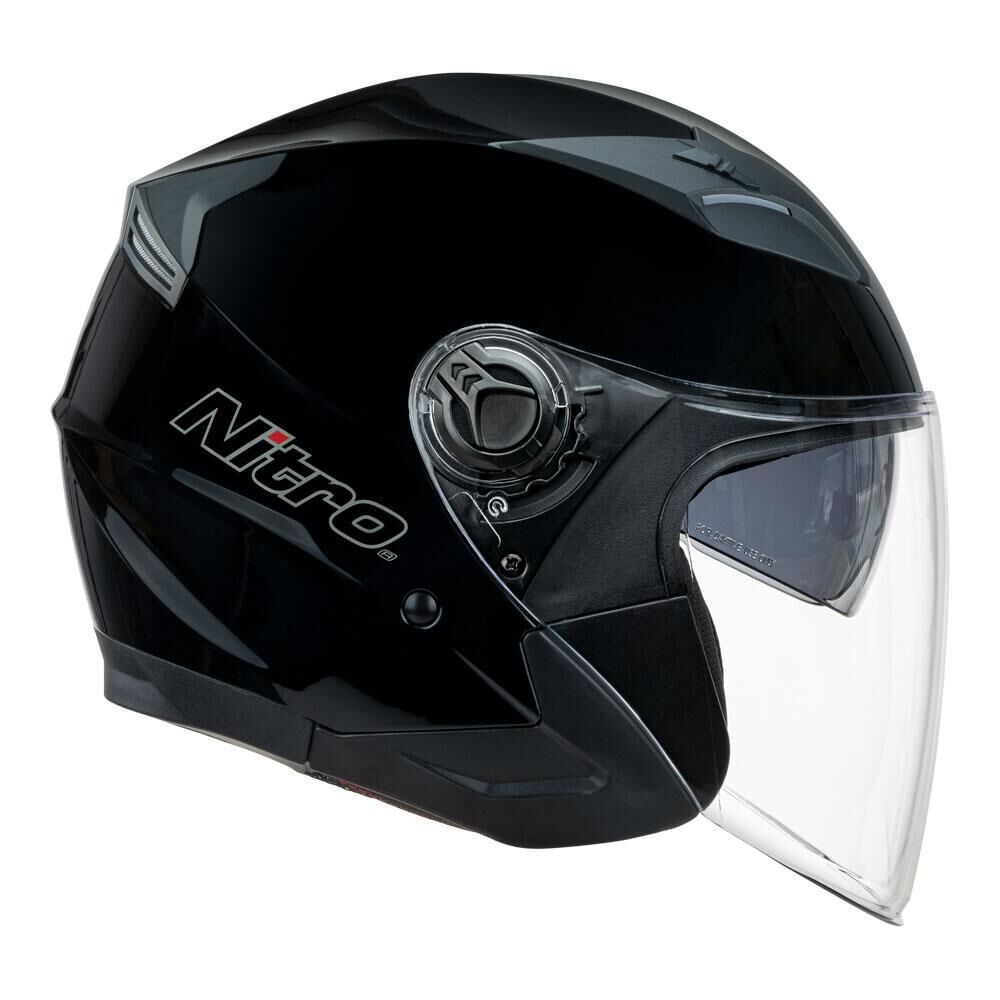
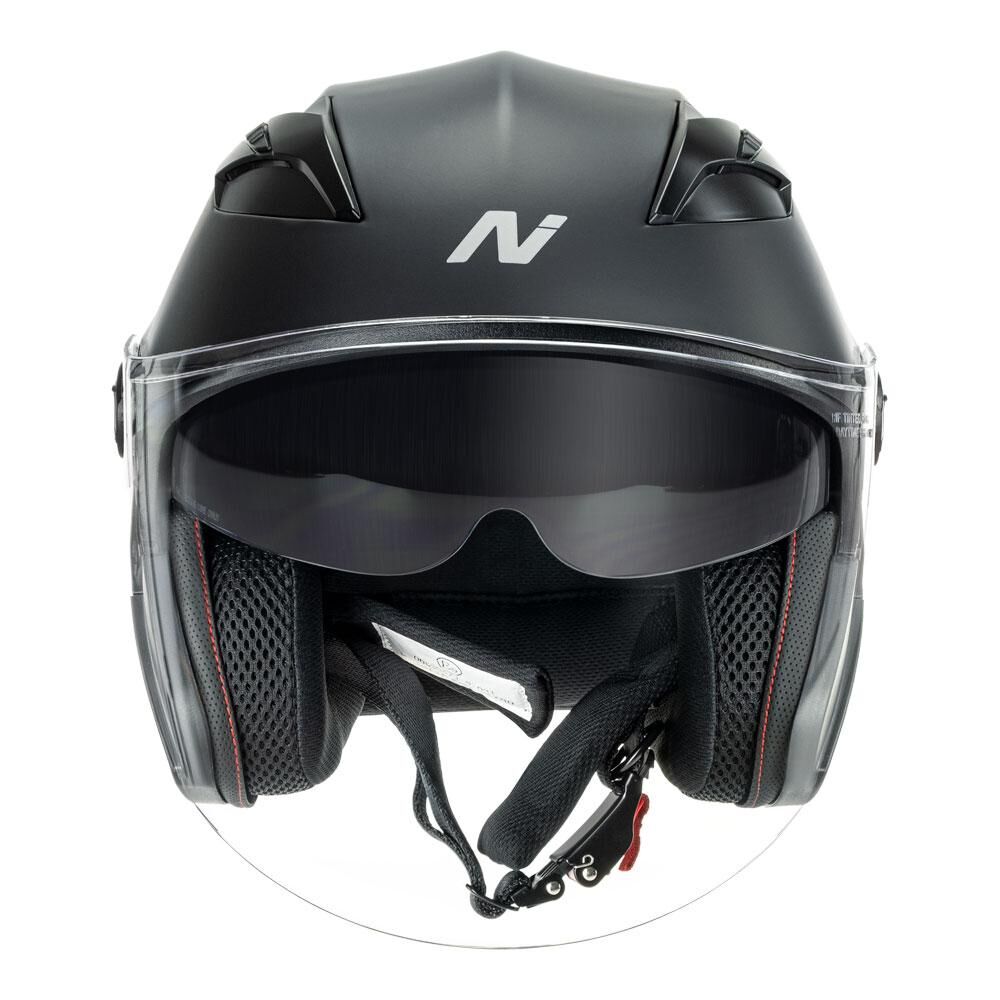
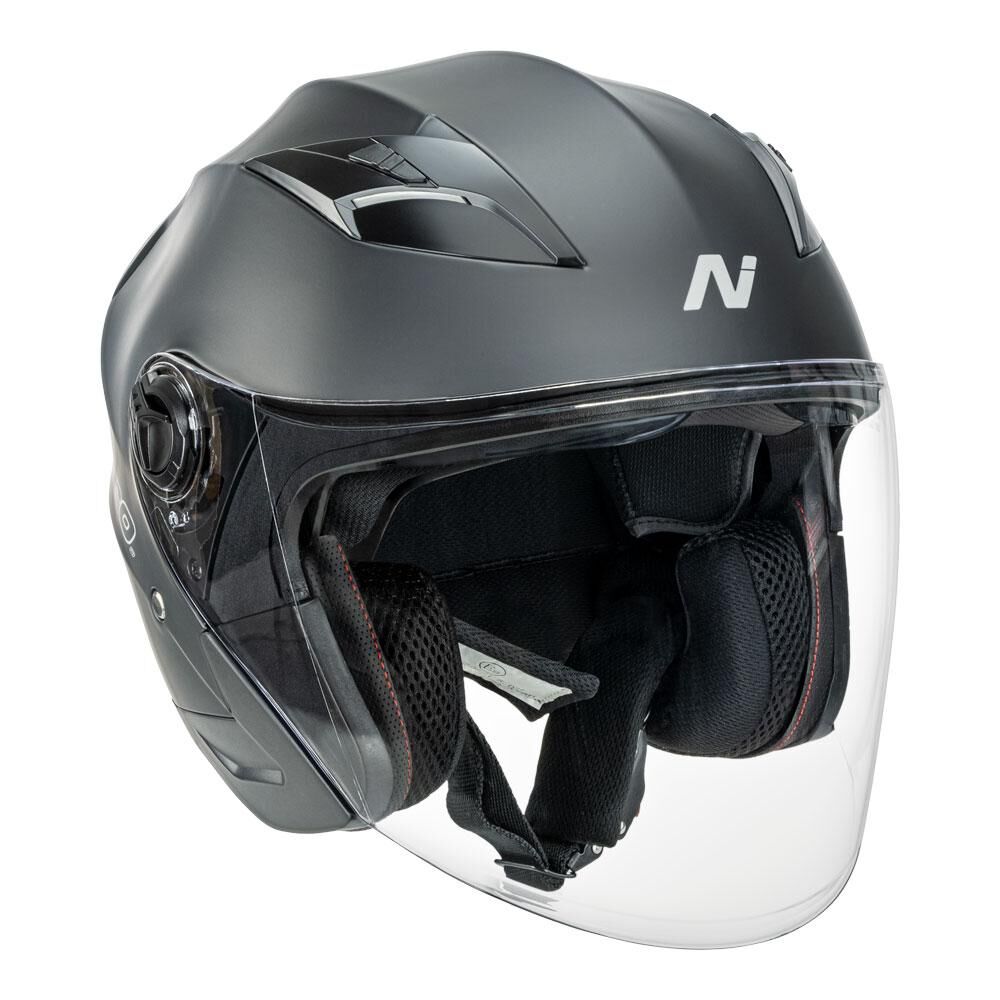
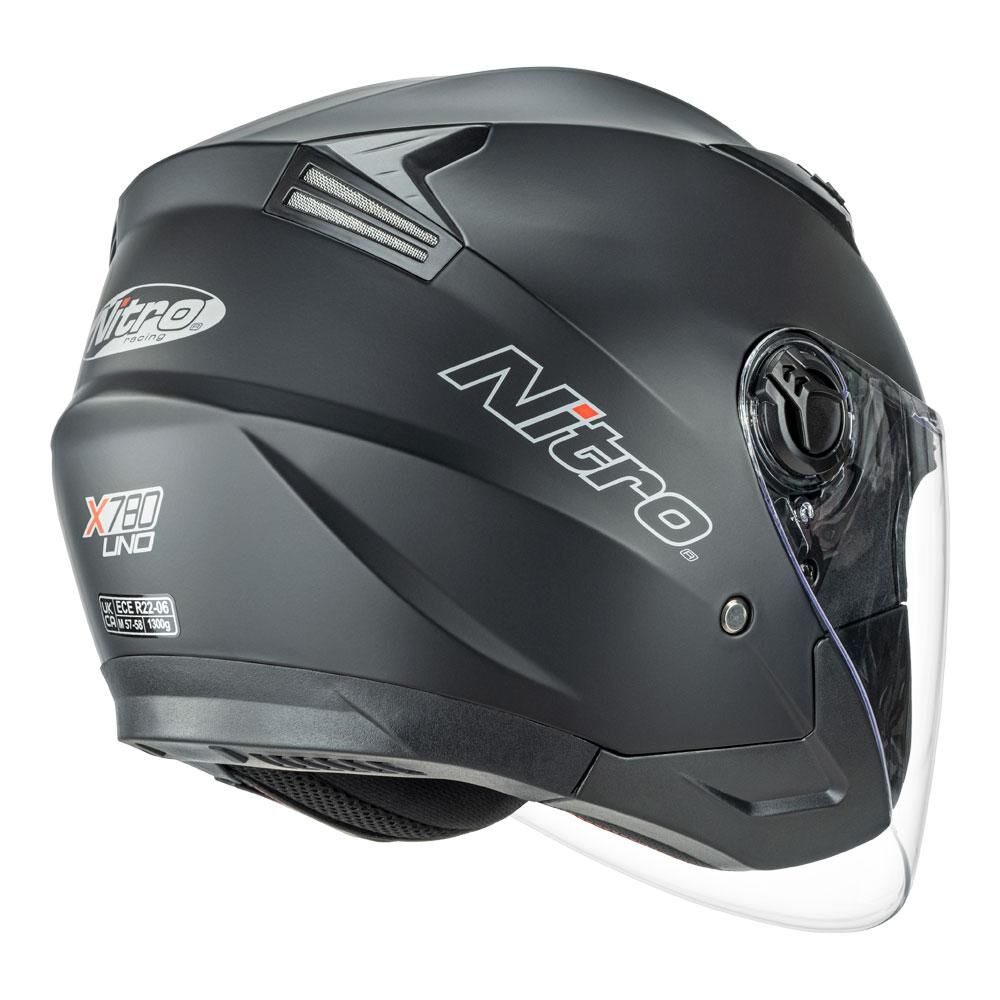
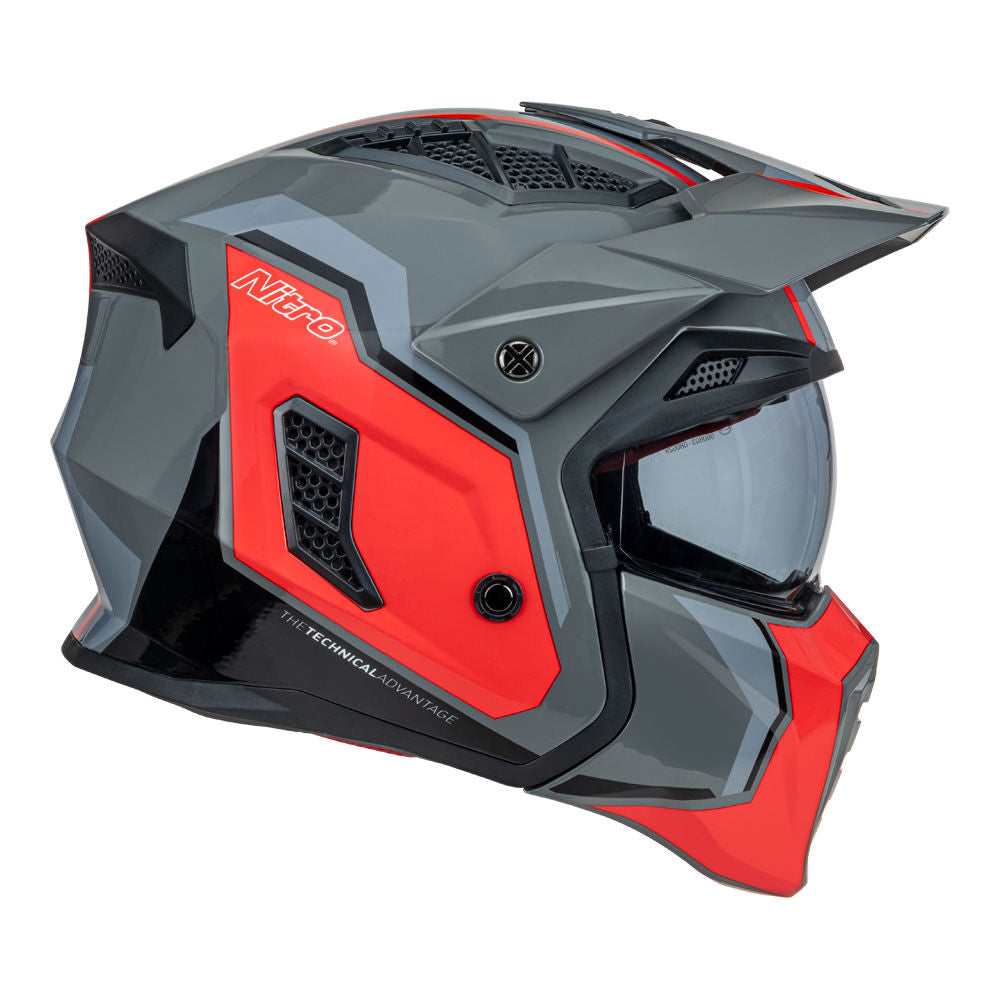
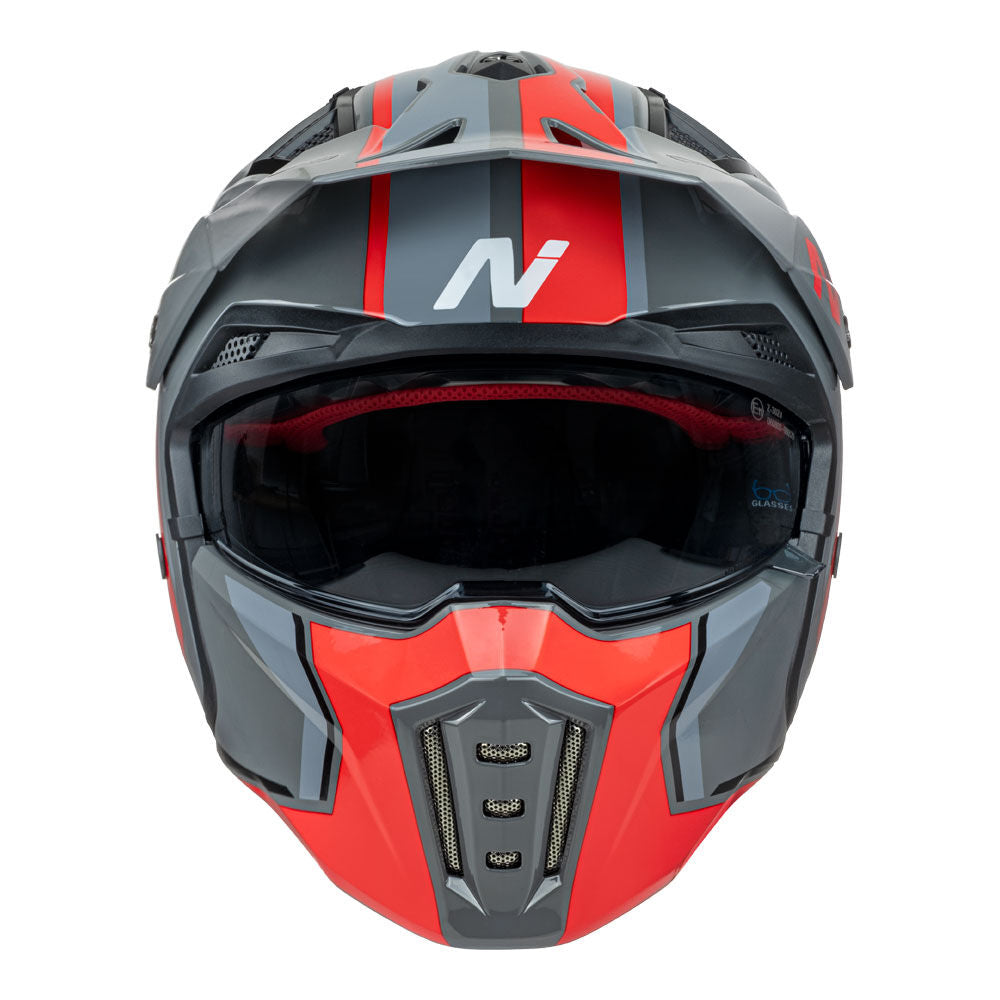
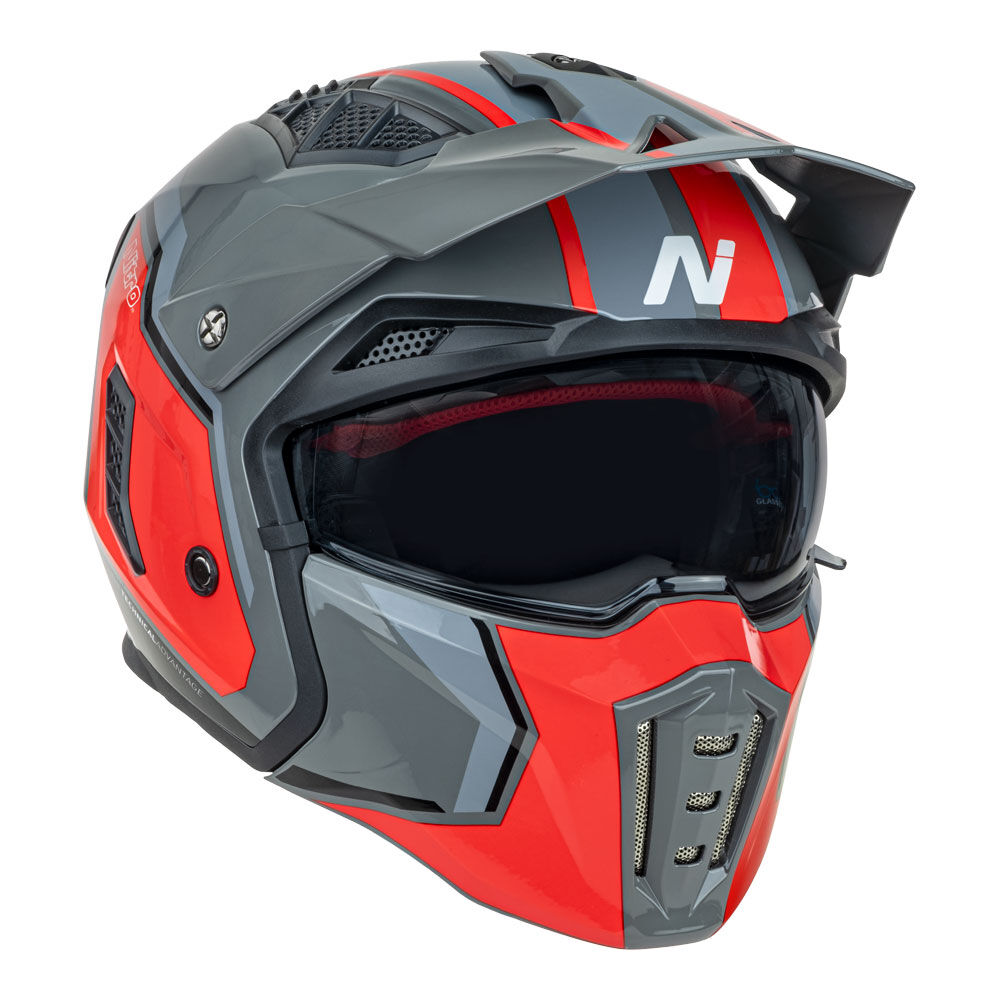
Short-distance commuters and summer riding. The LS2 OF616 Airflow II at RRP $109.99 to $129.99 is the honest choice. HPTT polycarbonate shell, one shell size from XS to 3XL, two large intake vents, AS/NZS 1698 certified. Light. Comfortable. Replaceable. For short hops in summer heat where a full face is suffocating, it does the job without asking you to commit to it. The Nitro X780S DVS at RRP $119.95, ECE 22.06 with twin top vents and a full-length drop-down visor, is the close second. The Nitro X100 at RRP $79.95 is the lowest entry into the range for riders buying their first commuter lid.
Performance and touring open face. The AGV K5 Jet EVO at RRP $479, carbon-fibreglass shell, two shell sizes, integrated spoiler and Pinlock-ready shield, is the best all-round open face in the range. At the premium end, the Airoh J110 at RRP $449.95 to $499.95 brings a full carbon fibre shell in two sizes, wind-tunnel tested, 2-in-1 shield system, for riders who want open-face freedom without giving up on the build quality.
One rule. The faster your typical speed and the longer your typical run, the more the trade-offs below start to matter. Read them before you buy.
What open face doesn't protect, and what it does
Contact zone studies estimate roughly 30 to 35 percent of helmet impacts involve the chin or jaw zone, with specific rates varying by study (Otte / Hannover Medical School and the COST 327 European study are the two most commonly cited sources). Open face helmets have no chin bar. That is not a criticism of the design. It is the design. Riders who choose open face have made a trade, knowingly.
What open face does not protect:
- Chin and jaw zone. No chin bar means no protection across the zone that accounts for roughly a third of helmet impacts in the most commonly cited contact zone research. If you go down face-first, the open face cannot help.
- Wind and debris above 80km/h. Without a chin bar, wind turbulence increases significantly at highway speeds. Bugs, gravel and road debris become a real hazard to the lower face. A visor or goggles mitigate this, but do not eliminate it.
- Noise. Open face helmets are louder. A typical full face at 110km/h measures 80 to 85 dB inside the shell. An open face at the same speed can hit 90 to 95 dB. Long-term hearing damage risk begins at sustained exposure above 85 dB. If you ride open face at highway speeds regularly, wear plugs.
What open face does protect:
- Crown, top and sides of the skull, with the same EPS liner and shell construction as a full face in the zones it covers.
- ECE 22.06 and AS/NZS 1698 certified shells on this page meet the same impact standards as full face lids across the zones they cover.
- Peripheral vision. A wider field of view than any full face, which matters for lane splitting, filtering and urban riding.
- Comfort on summer days. Cooler airflow reduces heat fatigue on slow urban runs where full face ventilation is largely ineffective anyway.
Shark Leathers started in a garage on the Gold Coast because one of us had learned the hard way what happens when the gear does not do the job. Matthew was 19. The bike went down. Twenty years on, he is still a quadriplegic, and every lid we stock is judged the same way: would we put it on one of our own? We stock open face helmets because riders who choose the trade-off knowingly deserve the right information to make that choice, not the absence of it. The risk calculation for short urban runs at 50 to 60km/h is different from highway touring at 110km/h. Worth knowing which you are before you buy. Full story at our story.
Open face helmet comparison
| Helmet | Shell | Weight | Certification | Price (RRP) | Best for |
|---|---|---|---|---|---|
| Nitro X100 | Injection-moulded ABS | Approx. 1,250g | ECE 22.06 | $79.95 | First commuter lid, budget entry |
| RXT Challenger | ABS shell | Approx. 1,300g | AS/NZS 1698 | $89.95 | Entry-level, scooter, commuter, 3-stud peak included |
| LS2 OF616 Airflow II | HPTT polycarbonate (1 shell, XS to 3XL) | Approx. 1,200g | AS/NZS 1698 | $109.99 to $129.99 | Commuters, summer riding, budget open face |
| Nitro X780S DVS | MPT (multi poly tech) | Approx. 1,350g | ECE 22.06 | $119.95 | ECE 22.06 with drop visor and twin top vents |
| RXT Classic | ABS shell | Approx. 1,300g | AS/NZS 1698 | $129.95 | Vintage and retro bikes, round old-school shape |
| AGV Orbyt | Thermoplastic (2 sizes) | Approx. 1,200g | ECE 22.05 | $199 | Urban, eyeglass wearers, entry AGV |
| RXT Stone Classic | ABS shell, gloss stripe | Approx. 1,350g | AS/NZS 1698 | $239.95 | Cruiser styling at a fair price |
| AGV K5 Jet | Composite fibre (2 shell sizes) | 1,350g (size S shell) | ECE 22.05 | $369 | Touring, Pinlock-ready, drop-down sun visor |
| Airoh J110 | Full carbon fibre (2 shell sizes) | Wind-tunnel tested | ECE 22.06 | $449.95 to $499.95 | Adventure-open hybrid, 2-in-1 shield system |
| AGV K5 Jet EVO | Carbon-fibreglass (2 shell sizes) | 1,350g (+/- 50g, size S shell) | ECE 22.06 | $479 | Best all-round open face, Pinlock-ready, integrated spoiler |
ECE 22.06 is the current standard and the one to look for on new helmets. AS/NZS 1698 is accepted for road use in all Australian states and territories. Both are fine for road use here. ECE 22.06 has tougher oblique impact testing than the older 22.05 it replaced, and became mandatory for new homologations in January 2024.
Frequently asked questions
Is an open face helmet legal in Australia?
Yes, in all states and territories. Australian law accepts helmets certified to either AS/NZS 1698 or UNECE 22.05 or 22.06. Every open face helmet on this page carries one of those certifications. A US-only DOT FMVSS-218 sticker is not sufficient for Australian road use. Check the chin strap area for the certification sticker before you buy any lid, open face or otherwise.
What is the difference between an open face and a 3/4 helmet?
They are the same thing. "Open face", "3/4 helmet" and "jet helmet" all describe a motorcycle helmet that covers the crown, back and sides of the head but has no chin bar. The terms are used interchangeably in Australia. Some retailers use "3/4" to distinguish a fuller open face (with ear coverage) from a simpler half-shell, but there is no standardised legal distinction. All open face helmets on this page cover at least the 3/4 zone.
Can I wear a face shield, or should I use goggles?
Both work. The choice comes down to use case. A visor (flat or bubble) clips to most open face lids and gives continuous coverage across the full face opening, better for highway speeds and dusty roads. Goggles suit slower urban rides, vintage bikes with narrow cockpit layouts, and riders who want to stop and push goggles up at the lights. Goggles gap at the sides of the face, which matters at speed. For anything over 80km/h regularly, a visor gives better debris and wind protection. We stock visors and goggles separately.
How much noisier is an open face compared to a full face?
Significantly. A full face helmet at 110km/h typically measures 80 to 85 dB inside the shell. An open face at the same speed can reach 90 to 95 dB. That is not a small difference. The decibel scale is logarithmic, so 90 dB is roughly twice as loud as 80 dB in practical terms. Long-term hearing damage risk starts at sustained exposure above 85 dB. If you ride open face on highways regularly, ear protection is not optional, it is smart. Good quality foam plugs reduce noise by 20 to 33 dB and cost under $5.
Do open face helmets work with intercoms?
Yes, most do. The AGV K5 Jet EVO is explicitly communications-compatible. The LS2 OF616 Airflow II lists LS2 intercom compatibility. For other models, check the product page. Most open face lids accept a clamp-mounted Cardo or SCS unit on the outer shell, the bracket clamps to the chin strap area, speakers sit inside the ear pockets. Fit can be tighter than a full face because there are no moulded speaker cutouts in most open face shells. Ask us before ordering if you are pairing a specific lid with a specific intercom.
How long does an open face helmet last?
The same rules apply as any lid. Most manufacturers rate the shell and EPS liner to 5 years from date of manufacture, or 7 years from date of first use, whichever comes first. The DOM (date of manufacture) sticker lives on the chin strap. EPS foam degrades with UV exposure and normal use even without visible damage. If the helmet takes a drop from head height onto a hard surface, replace it. Foam that has compressed once does not compress the same way twice, which matters a lot when it needs to absorb an impact.
Frequently asked questions
Is an open face helmet legal in Australia?
Yes. All Australian states and territories accept helmets certified to AS/NZS 1698 or UNECE 22.05 or 22.06. Every open face helmet at Shark Leathers carries one of those certifications. A US-only DOT FMVSS-218 sticker is not sufficient for Australian road use.
What is the difference between an open face and a 3/4 helmet?
They are the same thing. Open face, 3/4 helmet and jet helmet all describe a motorcycle helmet that covers the crown, back and sides of the head with no chin bar. The terms are used interchangeably in Australia.
Can I wear a face shield with an open face helmet, or should I use goggles?
Both work. A visor gives continuous coverage across the full face opening, better for highway speeds and dusty roads. Goggles suit slower urban rides and vintage bikes. Goggles gap at the sides, which matters above 80km/h. For regular highway riding, a visor gives better debris and wind protection.
How much noisier is an open face compared to a full face helmet?
Significantly. A full face at 110km/h typically measures 80 to 85 dB inside the shell. An open face at the same speed can reach 90 to 95 dB. Long-term hearing damage risk starts at sustained exposure above 85 dB. Ear plugs are strongly recommended for regular highway riding in an open face.
Do open face helmets work with intercoms?
Yes, most do. The AGV K5 Jet EVO is explicitly communications-compatible. The LS2 OF616 Airflow II lists LS2 intercom compatibility. Most open face lids accept a clamp-mounted Cardo or SCS unit on the outer shell.
How long does an open face helmet last?
Most manufacturers rate the shell and EPS liner to 5 years from date of manufacture, or 7 years from first use, whichever comes first. If the helmet takes a drop from head height onto a hard surface, replace it. Foam compressed once does not compress the same way twice.


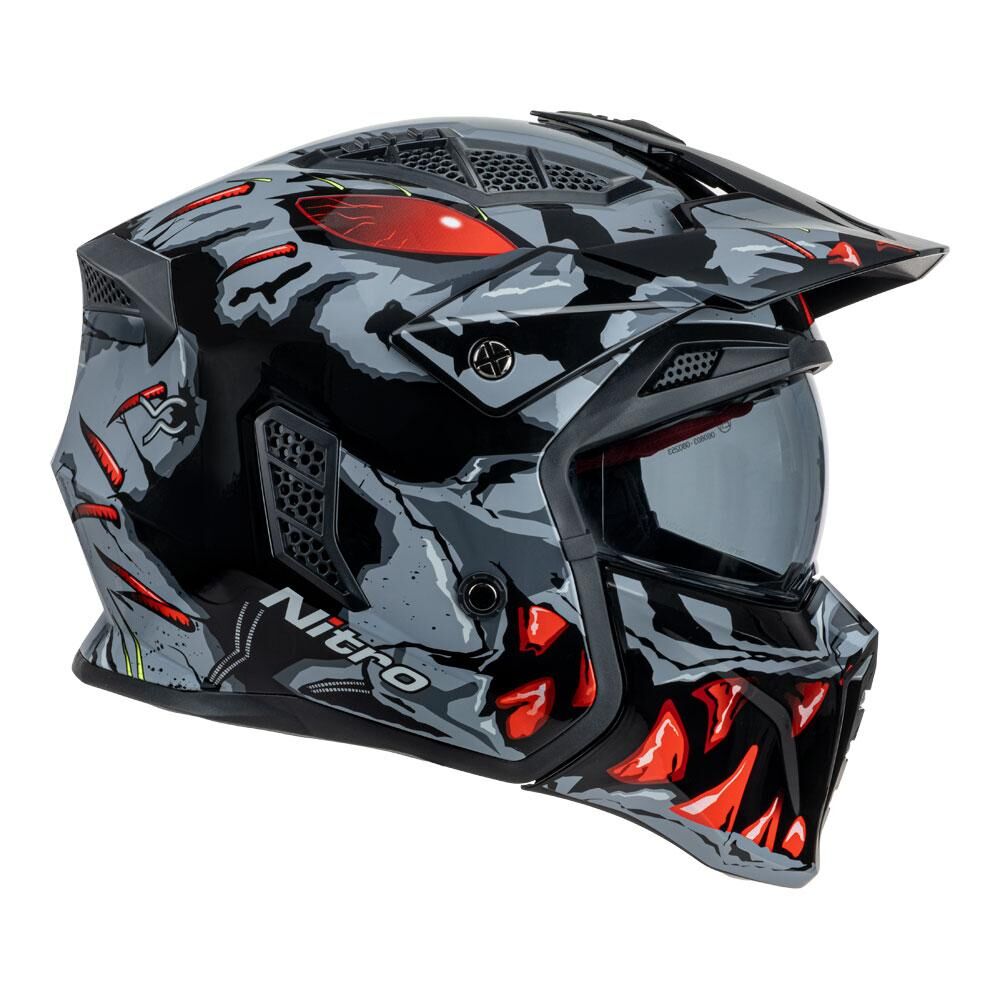
![Nitro - NITRO X582 TRIBUTE [BLK/GOLD] - Shark Leathers](http://sharkleathers.com.au/cdn/shop/files/85-109-04-P.jpg?v=1738471409&width=1000)